Slope as the baseline, not the exception
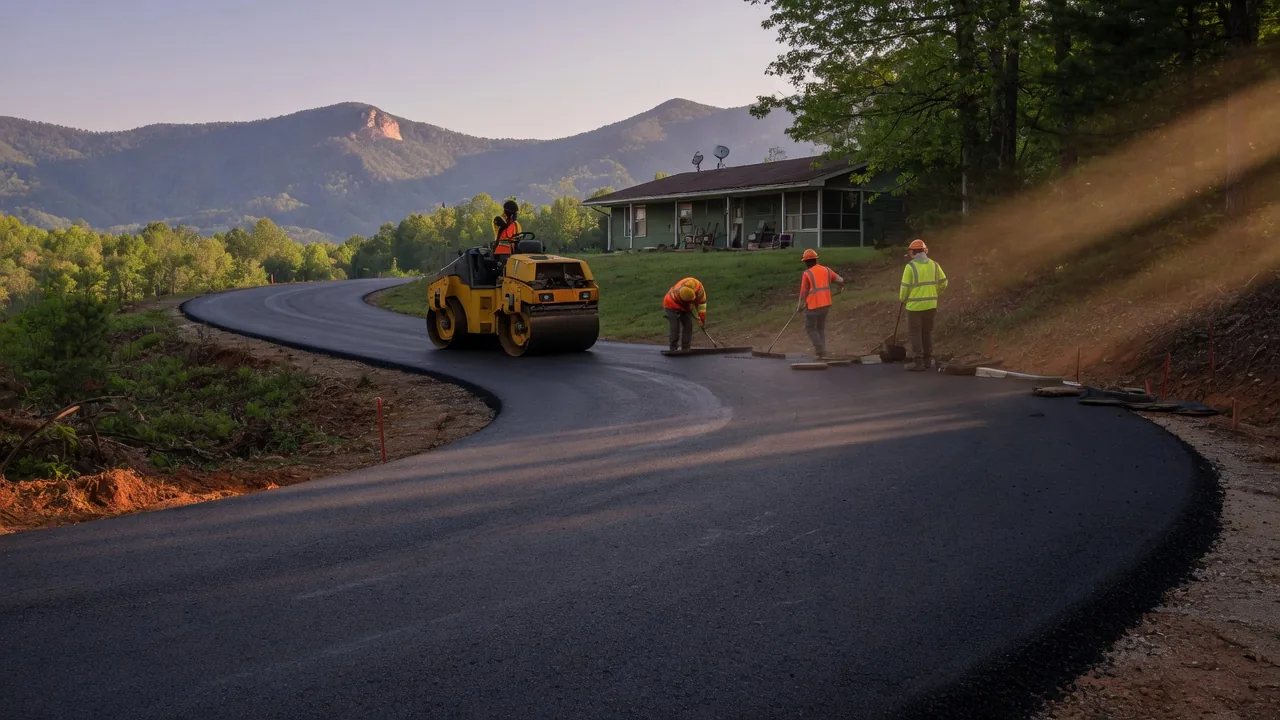
Fairview sits along US-74A east of Asheville, climbing into the Blue Ridge foothills where flat ground is the exception and hillside lots are the rule. Residential driveways here cover real elevation change — not the gentle pitch of a valley subdivision but actual mountain grade, sometimes switching direction at a mid-point landing to reach a pad cut into the slope. A 150-foot driveway on a Fairview ridge lot can drop more elevation than an entire street in east Asheville.
That geometry is the one fact that separates asphalt paving in Fairview from a quote anywhere else in Buncombe County. Slope changes every line item: drainage engineering, base rock depth, compaction equipment choice, and the time a crew spends on site. A contractor who prices Fairview the same as a flat lot in Arden is either not accounting for grade or planning to trim base depth once the contract is signed.
Lot types here vary widely: some properties have moderate slopes off paved county roads; others require a lengthy gravel approach that crosses a culvert, switches back twice, and arrives at a hillside garage. The scope that fits your lot is what separates one bid from another. The full picture of how paving crews price by terrain type is in the asphalt paving service overview.
What paving costs in eastern Buncombe County
The working range for new asphalt in this area is $4 to $8 per square foot installed, putting a typical residential driveway between $3,500 and $12,000 depending on size, grade, and base condition. The full line-item breakdown is in the driveway cost guide; the table below shows where common Fairview jobs land.
| Scope | Typical Range | Main Fairview Driver |
|---|---|---|
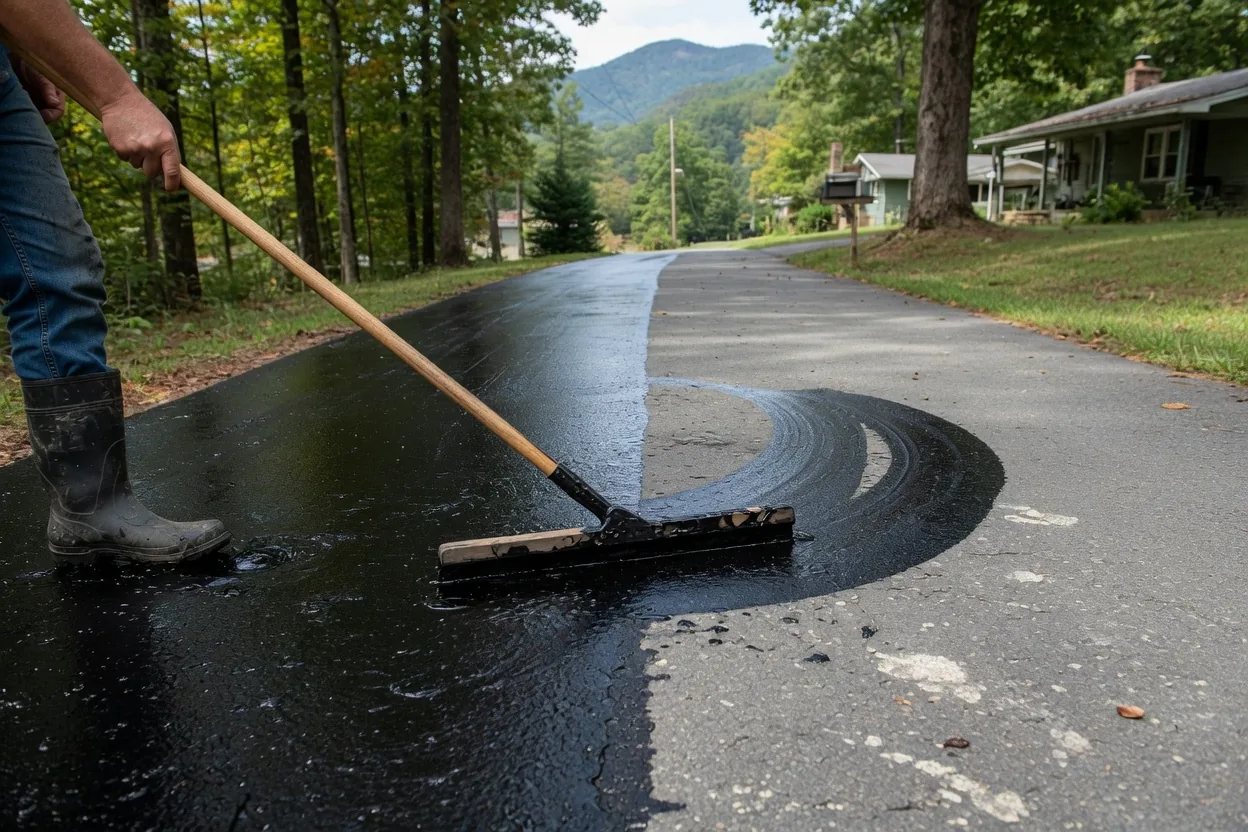
| Sealcoat & crack fill (maintenance) | $500–$1,500 | Driveway length, not grade |
| New driveway, flat to gentle grade (up to 600 sq ft) | $3,500–$5,500 | Standard base depth |
| New driveway, rolling grade (600–1,000 sq ft) | $5,000–$9,000 | Grading, drainage tie-in |
| Long or steep driveway with drainage work (1,000–1,500 sq ft) | $7,500–$12,000 | Engineering, compaction on grade |
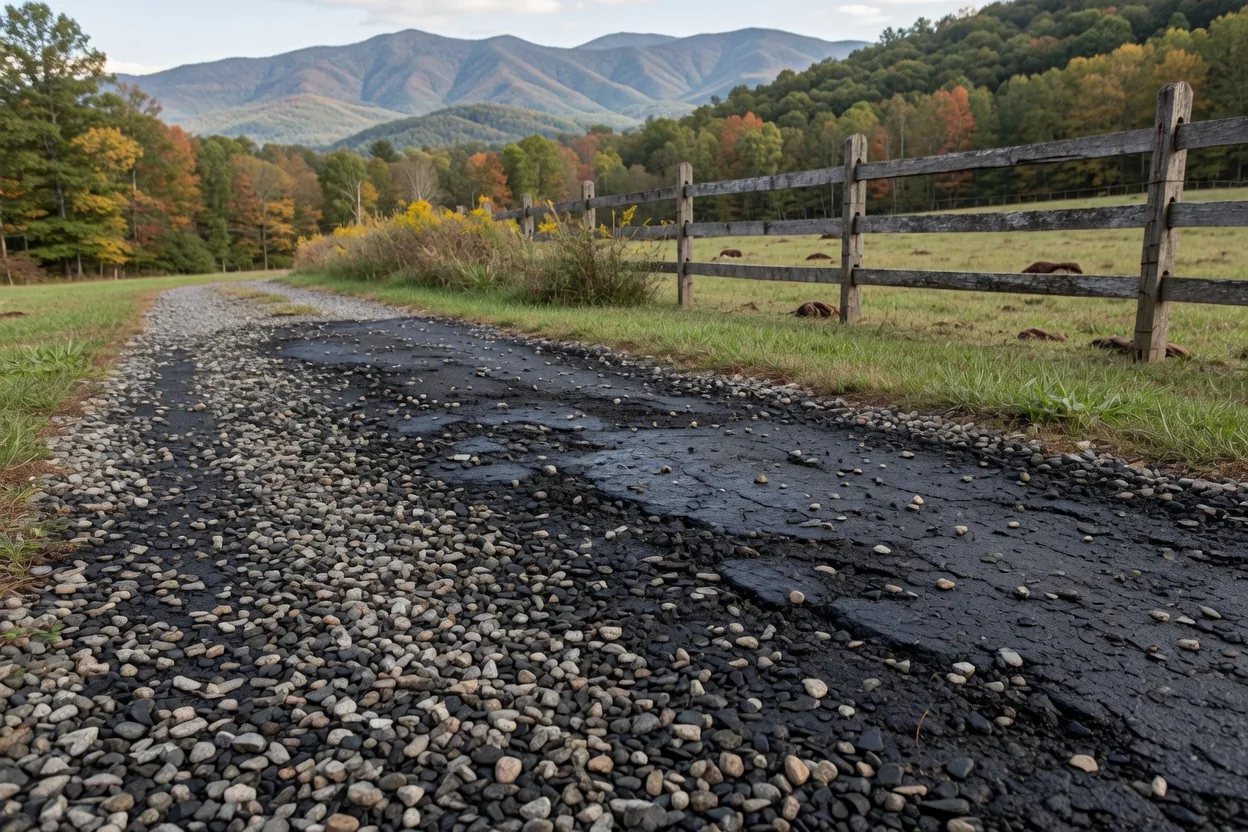
| Gravel-to-asphalt conversion, mountain lot | $4,000–$10,000 | Base evaluation, culvert adjustment |
Two items drive most Fairview quotes above the midpoint: grading work where the lot requires cut or fill before the base goes in, and drainage structures at the low end of the driveway where runoff concentrates. Both are routine on mountain terrain and should appear as explicit line items in any complete bid — not buried inside a materials estimate or quietly omitted in a budget number.
A third factor is mobilization. Crews traveling to a remote Fairview hillside may carry a travel cost that doesn't appear on a suburban Asheville quote. It is a legitimate charge on longer hauls to steep lots; make sure you are comparing total customer costs across bids, not just per-square-foot material rates.
Mountain water and what it does to a base
Buncombe County has 19 federally declared disasters on record spanning 1973-2026, the majority of them storm and water events. Residential driveways absorb the same rainfall those events delivered, and Fairview's elevation means the eastern Buncombe foothills receive more annual precipitation than county averages recorded in Asheville. The National Weather Service Asheville office documents the region averaging over 46 inches of rain annually, with upland sites running consistently higher.
On a slope, water does not pool — it travels horizontally under the pavement if the base does not route it away. A proper base for sloped asphalt runs 6 to 8 inches of compacted aggregate on moderate sections and deeper at grade breaks where runoff concentrates. Drainage structures — correctly sized culverts, french drains, or catch basins — are load-bearing components of the driveway system, not optional upgrades.
Freeze-thaw cycles matter here in a way they do not at lower Buncombe County elevations. Water that infiltrates a thin base in late fall expands when temperatures drop, heaves the surface through winter, and leaves a soft spot when spring drainage begins. One cycle of that is cosmetic. Several cycles across a few winters are structural, and repairing heave after the fact costs considerably more than building the base correctly at installation. The gravel-to-asphalt conversion guide covers base evaluation in detail for driveways making that transition.
Mountain-clay soils common in the Fairview area also expand and contract with seasonal moisture changes more than sandy or loam soils. A base laid on unstabilized clay without adequate compaction will track that movement into the surface course. Good crews test the subgrade and, if needed, add stabilization fabric or deeper aggregate before the final lift goes down. It is not exotic practice — it is standard on any mountain lot where the subgrade has not been mechanically verified.
Driveway permits on state-maintained roads
Most roads in rural Buncombe County — including the majority of roads in and around Fairview — are maintained by the state under the NC Department of Transportation. When a new driveway or a repaved connection alters the curb cut, drainage culvert, or approach geometry at a state road, an NCDOT driveway permit is required before paving begins. Applications go through NCDOT Connect, and processing time varies by road classification and current workload.
Skipping the permit is not a savings — NCDOT can require removal and reinstallation of unpermitted work at the property owner's expense. If the project also involves grading, retaining structures, or land disturbance over the applicable area threshold, Buncombe County erosion control rules add a second layer of review. Ask your contractor which permits they are pulling and confirm that before work starts, not after.
What to ask before you sign a paving contract
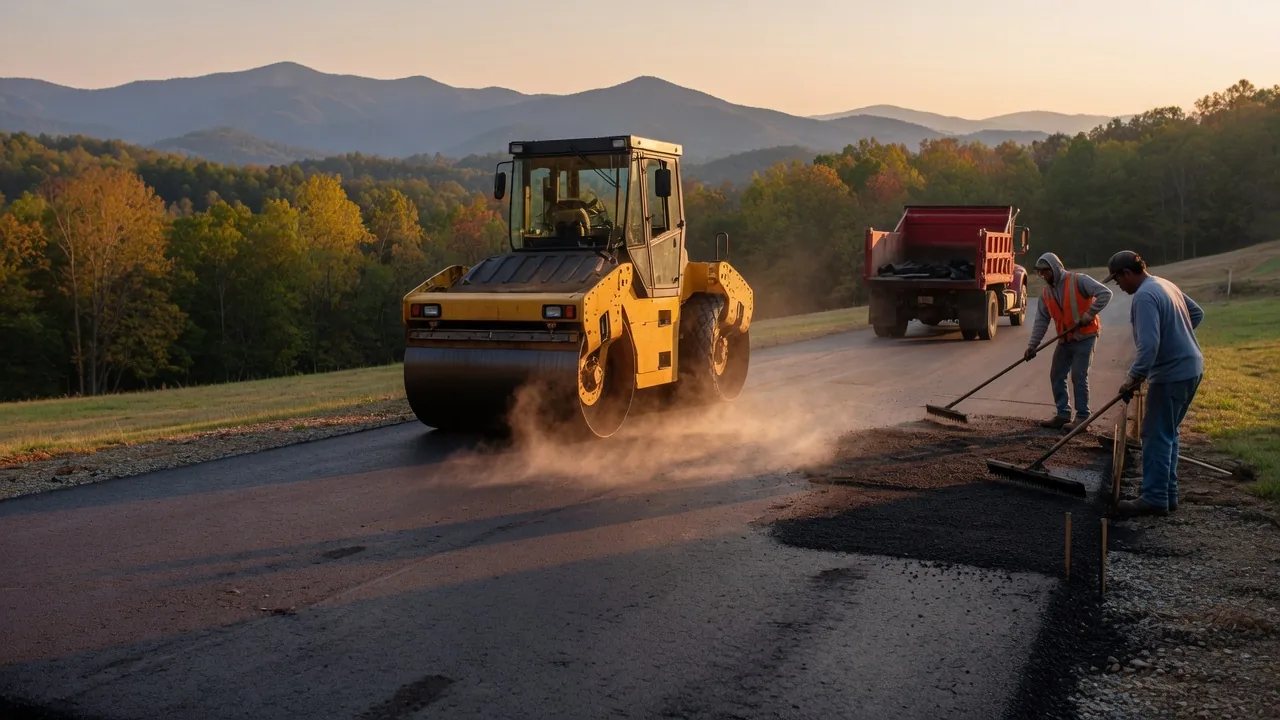
Three questions worth asking every bidder in Fairview: how do they manage drainage at the low end of the driveway, what compaction equipment are they bringing to a sloped site, and can they show a reference job on a lot with comparable grade to yours. A crew that answers all three with specifics is quoting your driveway. A crew that deflects is pricing a generic flat-lot job and hoping it translates.
State licensing requirements apply to paving work once it crosses the applicable contract threshold. For guidance on licensed contractors in North Carolina, the NC Department of Insurance maintains building code and contractor licensing resources. When a bid lands significantly below the field, a scope comparison is more useful than a counter-offer — on steep terrain, the gap between a low number and an honest one almost always lives in base depth, compaction passes, and drainage line items that never made it onto the page.