How Buncombe County terrain changes the repair
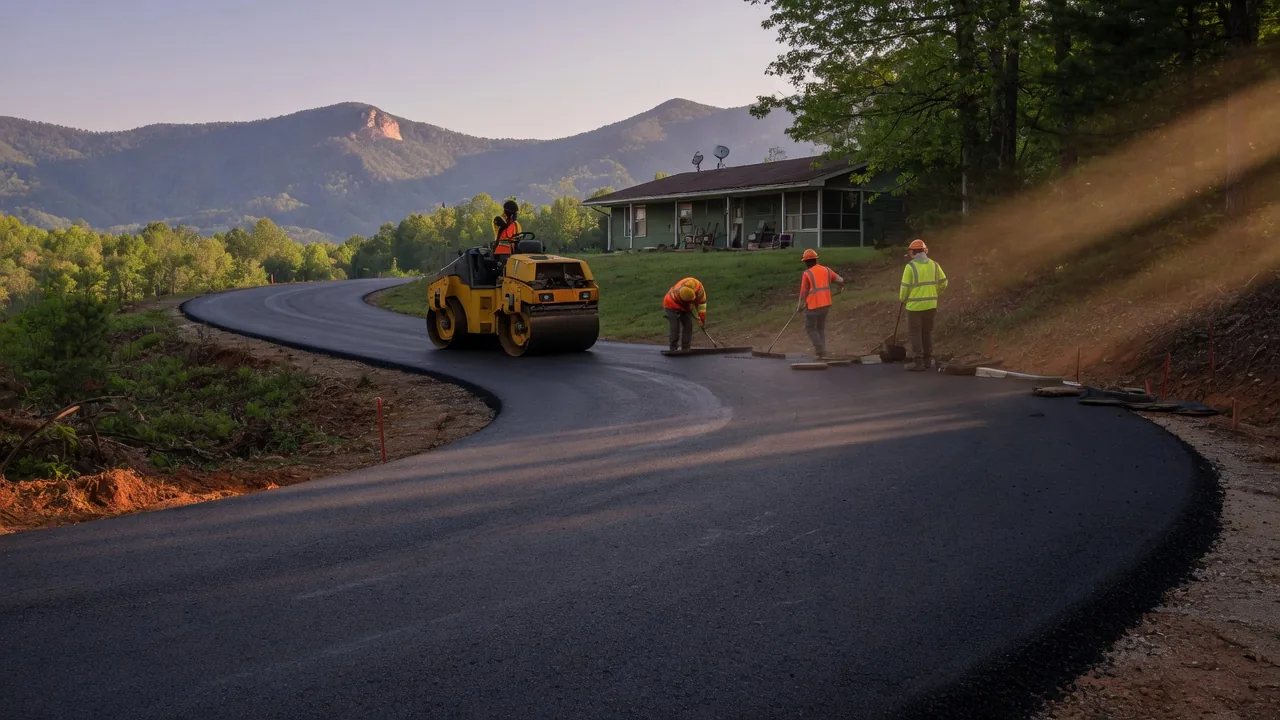
A driveway on a flat piedmont lot has compacted earth pressed against all four sides of the asphalt mat. Driveways across Buncombe County rarely have that condition. On the ridge lots above West Asheville, the cut-and-fill slopes off Town Mountain Road, and the long descending approaches common in the rural eastern parts of the county, the downhill edge of the asphalt often sits above fill material rather than native compacted soil. That is not a contractor shortcut — it is the physics of grading a mountain lot. But it means the edge is doing structural work that flat-lot asphalt never has to do, and when moisture works in from above, the fill settles and the edge crumbles rather than just wearing.
That dynamic is why a diagnosis of crumbling edges here cannot start at the surface. The driveway repair guide explains how to read what the damage is actually telling you before any scope is written.
What the crumbling pattern tells you
Three stages of edge failure show up on Buncombe County driveways, and each one is a different repair job.
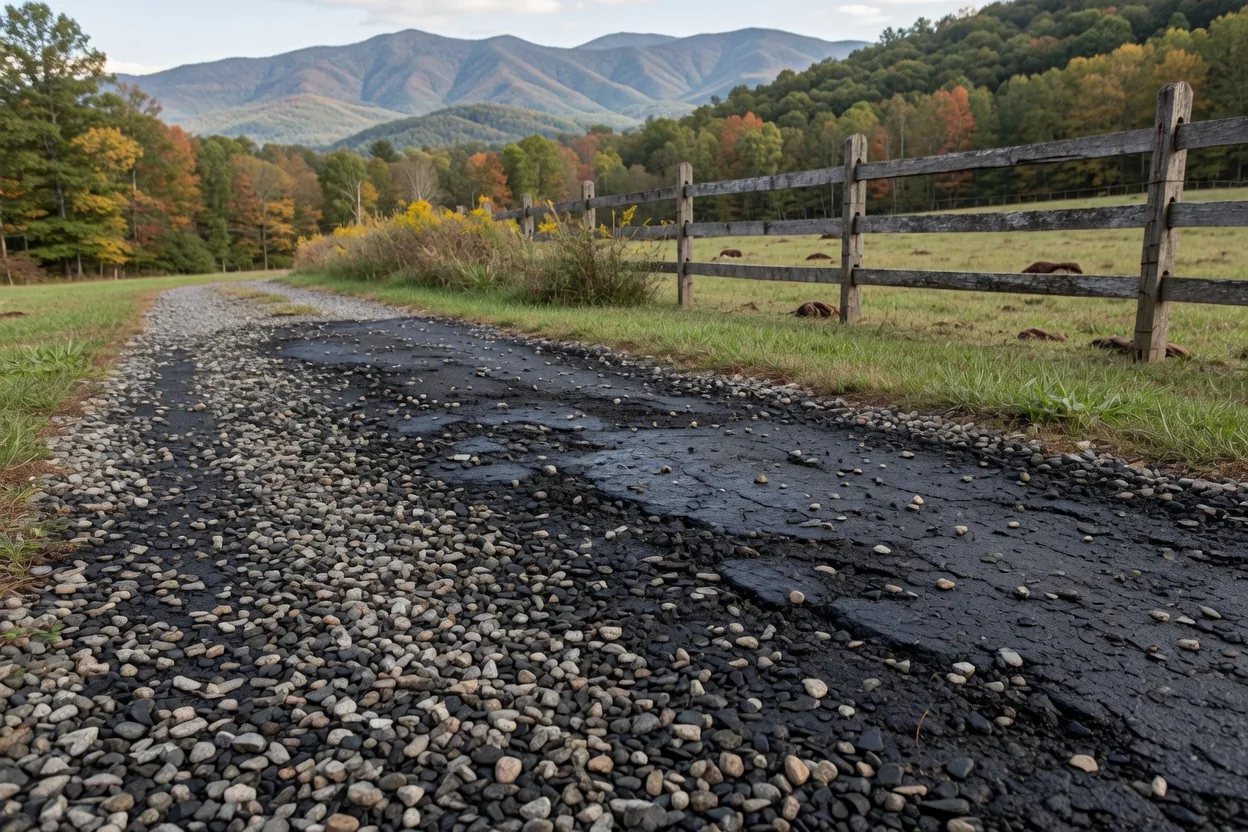
Surface raveling is the early stage: aggregate is loosening and flaking along the edge face while the asphalt a few inches in is still intact. Caught here, the repair is inexpensive. Subbase washout comes next: the edge may look whole from the top, but walking it reveals a hollow sound or soft give underfoot. The asphalt has lost its base from below — usually because a drainage channel ran along the edge long enough to undermine the gravel layer. Full edge collapse is visible: sections have broken free from the driveway face and are migrating downslope in chunks, and the break line is advancing inward. Each stage roughly doubles the repair cost and changes the scope from surface patching to full base reconstruction.
Installed thickness is frequently part of the story. Asphalt paved thinner at the outer edge than in the center is the first section to fail on any slope lot — the thickness guide covers what residential driveways in this area should be built at and what a shortcut looks like two winters later.
What repairs cost and what each scope covers
The table below shows the four main repair scopes and realistic cost bands for residential driveways in Buncombe County. These ranges assume standard vehicle access to the edge; slope-access difficulty or significant subbase excavation pushes cost toward the upper end.
| Scope | What it covers | Typical range |
|---|---|---|
| Edge crack sealing | Hot-rubberized fill on edge cracks up to ½ inch wide | $150–$350 |
| Edge surface patch | Cut-and-fill patch on raveled or spalled edge sections | $300–$700 |
| Subbase repair and patch | Excavate failed edge, rebuild gravel base, relay asphalt surface | $700–$1,600 |
| Full edge reconstruction | Full perimeter edge rebuild with compaction and drainage corrections | $1,400–$2,400+ |
These are whole-job estimates for a typical residential driveway section, not per-linear-foot unit prices. A quote that prices per foot on a slope-lot job without a drainage line item is an incomplete number, not a bargain.
Why water reaches the edge first in mountain terrain
Buncombe County's storm record makes drainage correction mandatory before any patch is laid. The 19 federal disaster declarations on file for this county (1973-2026) are overwhelmingly weather events — and each one pushed water volumes at residential paving that the original grading was never sized to handle. The National Weather Service data for the Asheville area shows western North Carolina among the state's highest annual rainfall totals; on a slope lot, that rainfall concentrates along the low edge of a driveway before it finds a way off the property.
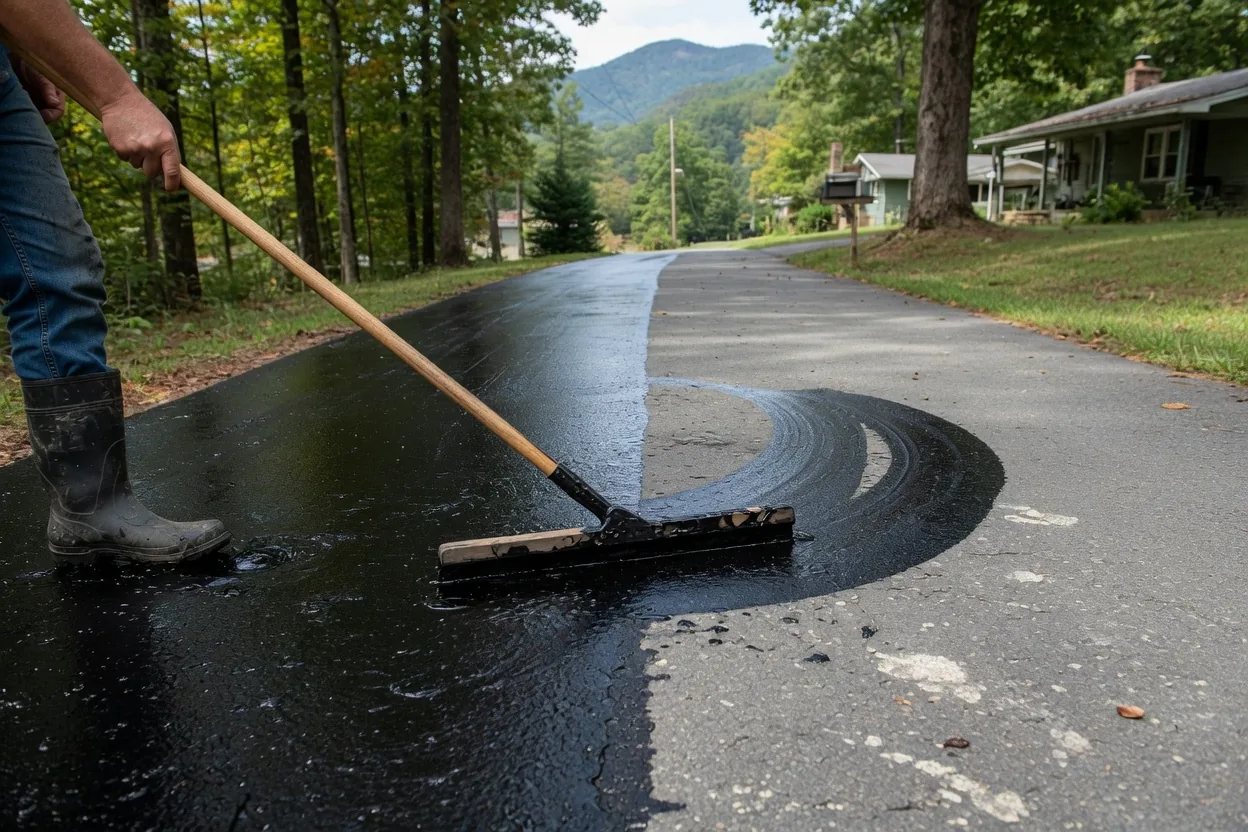
Patching an edge without correcting where the water goes is short-term work on a long-term failure. Grading the shoulder away from the asphalt edge, adding a stone strip or channel drain at the edge, and making sure roof gutters are not directing discharge across the driveway surface all reduce the forces that destroyed the first edge. Once drainage is corrected and the edge is rebuilt properly, a sealcoating application closes the surface voids that let moisture penetrate to the base and slows the aggregate breakdown that restarts the crumbling cycle.
Permits, process, and what good edge work looks like
Most residential driveway edge repairs in Asheville and unincorporated Buncombe County do not require a building permit. The exception is work that modifies a driveway approach to a state-maintained road. Rural and semi-rural parts of the county have many driveways that exit onto routes with NCDOT numbers rather than city streets, and any modification to that connection point may require prior approval through the NCDOT driveway permit process. Confirm which type of road your driveway connects to before work begins, not after a contractor has already cut into the edge near the road.
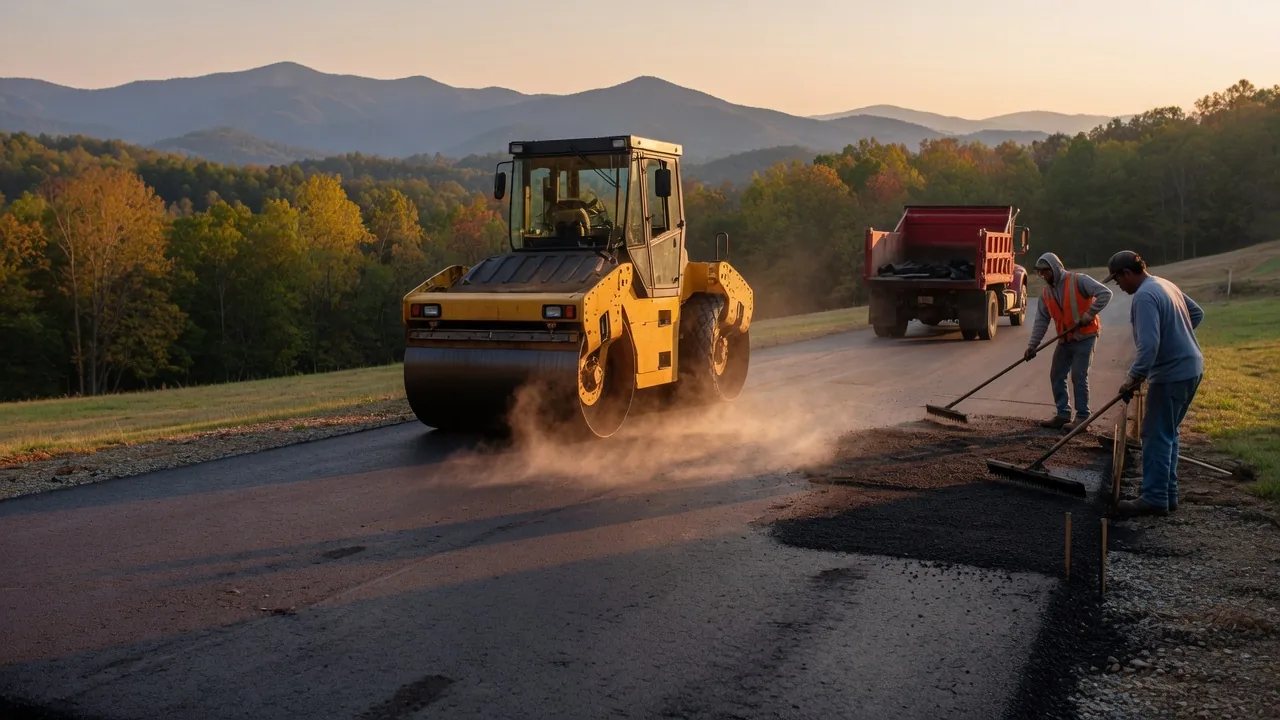
On the contractor side, the tells of a proper edge repair on a slope lot are straightforward: they cut a clean vertical edge rather than feathering new asphalt onto a crumbled face, they compact the subbase at the cut line before laying any new material, and the finished repair matches the thickness of the surrounding mat. The NC Department of Insurance's building code resources set the baseline standards for residential paving in this state. A contractor who can walk you through how their process meets those standards is generally worth the conversation; one who cannot explain the subbase compaction step is the one you will be calling again next season.