The ground below shapes every quote
Fletcher occupies the northern edge of Henderson County where the French Broad River valley transitions into the first ridges of the Southern Appalachians. At roughly 2,100 feet of elevation, the town sees more freeze-thaw cycles each winter than nearly anywhere in the piedmont or coastal plain. The valley floor also carries a heavier clay content than most property owners realize until a contractor starts excavating. Both of those facts show up directly in the final price.
Clay holds moisture. Moisture expands when it freezes. Asphalt laid on an inadequately prepared clay base will heave, crack, and edge-lift within a few winters — not because the asphalt itself failed but because the four to six inches beneath it moved. A contractor who prices base preparation as an optional line item in Fletcher is skipping the variable that matters most on these sites.
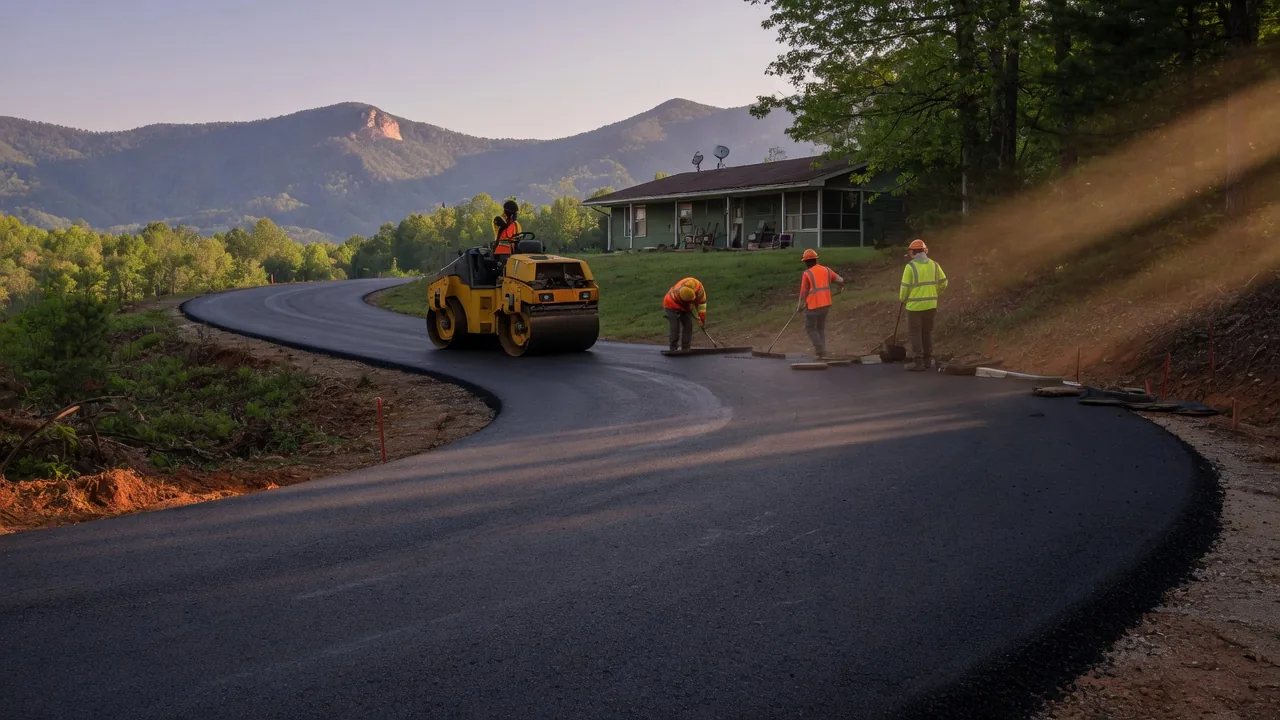
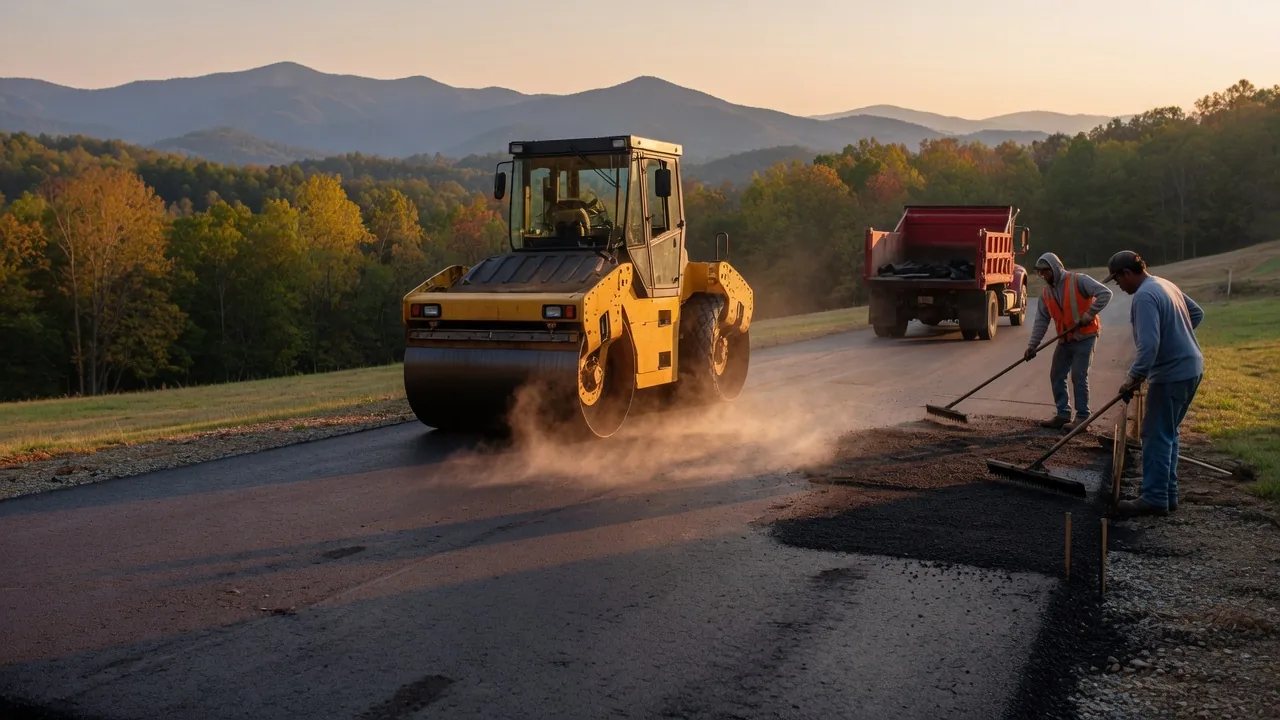
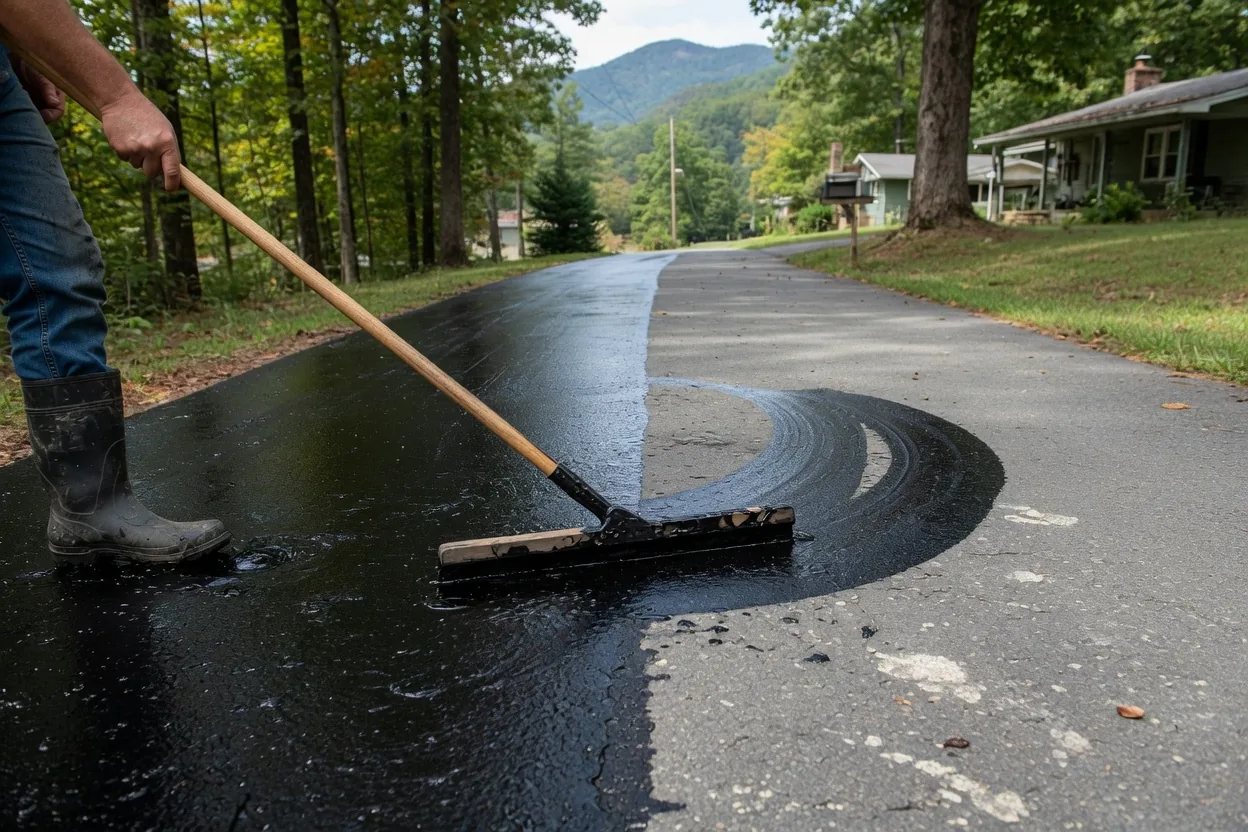
A proper job here includes removal of existing material, a compacted aggregate base (typically four to six inches of crusher run on valley-floor lots), and drainage pitch built into the finished surface. Driveways that run toward the house rather than away from it are a warranty claim waiting to happen. The full asphalt paving overview covers how base specifications vary by project type and terrain.
Fletcher's growth as a residential community in the southern Asheville metro means many lots were carved from what was previously orchard or farm ground. Henderson County has long been recognized as one of North Carolina's principal apple-growing regions, and former agricultural soils — compacted by decades of equipment traffic and amended with organic matter that has since broken down — can behave very differently from undisturbed native ground. A contractor unfamiliar with local land history may underestimate how much sub-base correction a site requires before any asphalt goes down. Lots at the valley margin, where the terrain rises toward the first ridges, often mix heavy red clay with rocky fill from earlier grading work, which creates uneven compaction across a single driveway footprint.
What paving jobs cost in Henderson County
Fletcher quotes follow the local terrain: flat lots near the I-26 corridor come in closer to the low end; rolling grades on residential streets in the eastern county push toward the top. The table below reflects installed prices for the western NC market — see the driveway cost breakdown for line-item detail on each scope.
| Scope | Typical Installed Range |
|---|---|
| Small flat driveway, 600–800 sq ft, sound existing base | $3,500–$5,500 |
| Mid-size driveway, 1,000–1,400 sq ft, minor grade | $6,000–$9,000 |
| Gravel-to-asphalt conversion with base rebuild | $7,500–$12,000 |
| Steep grade or significant cut-and-fill required | $8,000–$12,000 |
A few items push quotes toward the high end: haul distance from the nearest plant, whether the existing surface requires full excavation, and how much sub-base correction the site needs before any asphalt goes down. Ask any bidder to separate base work from surface work so quotes are genuinely comparable.
Asphalt mix temperature drops during transport, and jobs at rural Henderson County addresses farther from regional plants may require tighter scheduling or smaller staged loads to maintain mix quality through the pour. This is a real operational consideration on jobs that involve more than one delivery or that require hand-finishing on steep approaches. Ask your contractor where the nearest plant is and how they manage mix temperature on multi-load jobs — crews who work this market regularly will have a clear answer.
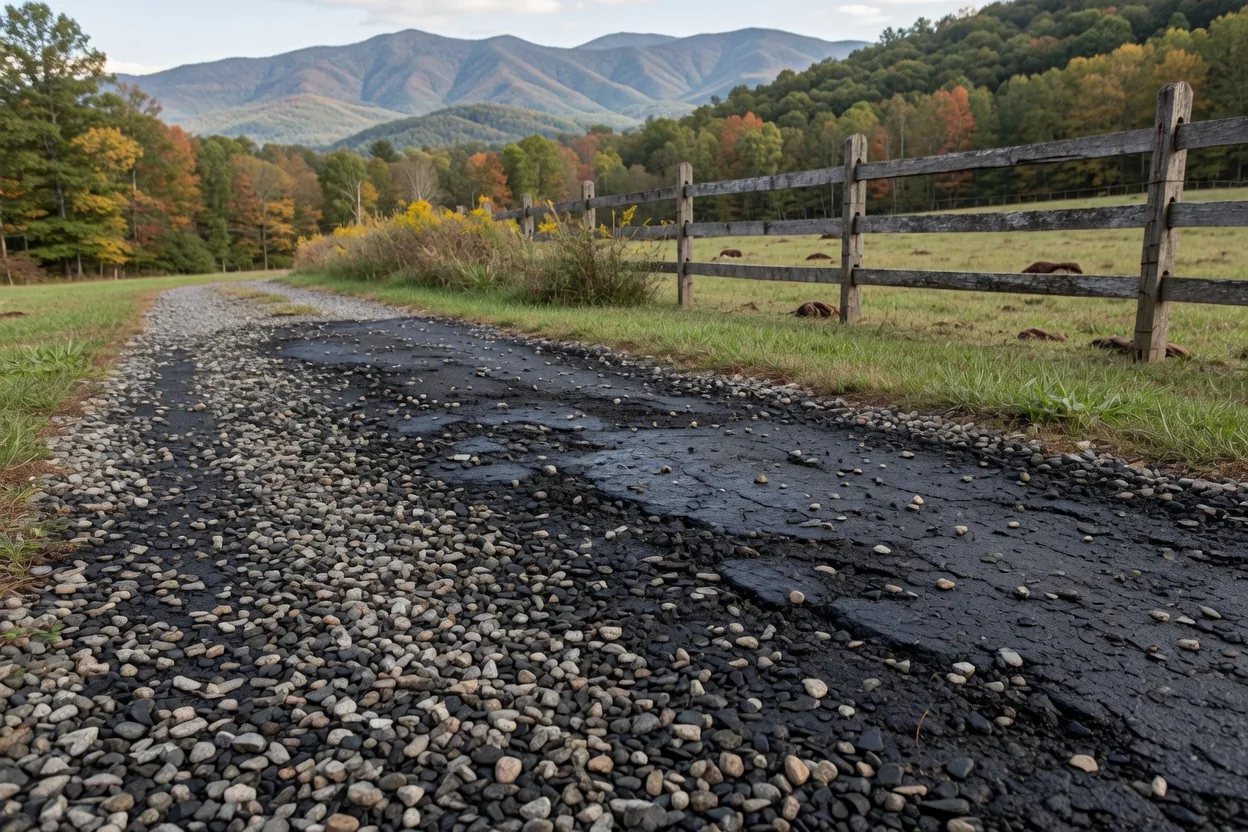
Gravel-to-asphalt conversions are common throughout the county because many older rural lots were developed before paved driveways were standard. Those conversions almost always require a full base assessment rather than a straight overlay, particularly on clay-heavy ground. The gravel-to-asphalt guide explains what distinguishes an overlay candidate from a site that needs a full rebuild.
Water and drainage: what the storm record says
Henderson County carries 16 federal disaster declarations on record spanning 1978-2026, the large majority of them storm and flood events. Every one of those events tested drainage infrastructure on residential lots — including paved driveways. Asphalt built without adequate slope and edge drainage channels runoff toward foundations, erodes sub-base at the edges, and becomes a liability during the heavy rainfall events that western NC receives regularly.
The National Weather Service data for the Asheville area confirms what local contractors already know: Henderson County catches orographic rainfall from multiple storm tracks, and flash runoff is a normal seasonal event here rather than a rare one. Before a paving crew arrives, identify where your lot's water naturally flows. A driveway that sheets cleanly to the street is low-risk; one that pools at the base or where it meets a garage apron creates the exact conditions for base failure and premature cracking.
If your lot has uphill drainage problems, resolving them before paving costs a fraction of what fixing them after the asphalt is in place will cost.
Good drainage design on a Fletcher residential lot means more than just surface slope. Edge channels, curb returns at the street connection, and the transition zone where a driveway meets the garage slab or a walkway all need to carry water away from the foundation rather than toward it. The steeper the lot, the more critical those details become — water moving fast downhill concentrates at low points and will find any weakness in edge sealing or base compaction. Contractors experienced on Henderson County terrain will often walk a site and observe where runoff concentrates before finalizing a drainage plan. Asking what drainage features are included in a bid is a reasonable question that any experienced local crew should answer without hesitation.
Permits and choosing the right crew
Any driveway in Fletcher connecting to a state-maintained road requires a driveway permit from NCDOT before ground is broken. Applications go through NCDOT Connect, the department's online permit portal; approval timelines vary by season and district workload. Properties in subdivisions or connecting to private roads may fall under Henderson County jurisdiction instead — confirm which applies to your parcel before scheduling work so a permit issue does not pause the job mid-project.
On the contractor side, ask for references on projects similar in grade and scope to yours. A crew with strong experience paving flat commercial lots along the I-26 corridor may not be the right pick for a twelve-percent-grade residential driveway in the eastern county — steep-grade compaction requires different equipment staging and more hand-finishing. Ask specifically how they handle base depth on clay sub-base; that question separates contractors who know Henderson County terrain from contractors who know asphalt in general.
North Carolina requires contractors performing work above certain dollar thresholds to hold a current state license. The NC Department of Insurance publishes guidance on licensing requirements and building code standards that apply to residential site work. Asking to see a contractor's license documentation before signing any agreement is standard practice, and any legitimate local crew will have it readily available. Larger projects — those involving significant grading, retaining walls, or cut-and-fill work — may carry additional regulatory steps beyond the driveway permit itself, so clarify scope and responsibility at the estimate stage rather than after work has started.
If your current surface is gravel, the gravel-to-asphalt conversion guide explains what the transition involves and which site conditions qualify for a straight overlay versus a full base rebuild.