The mill-town pavement equation
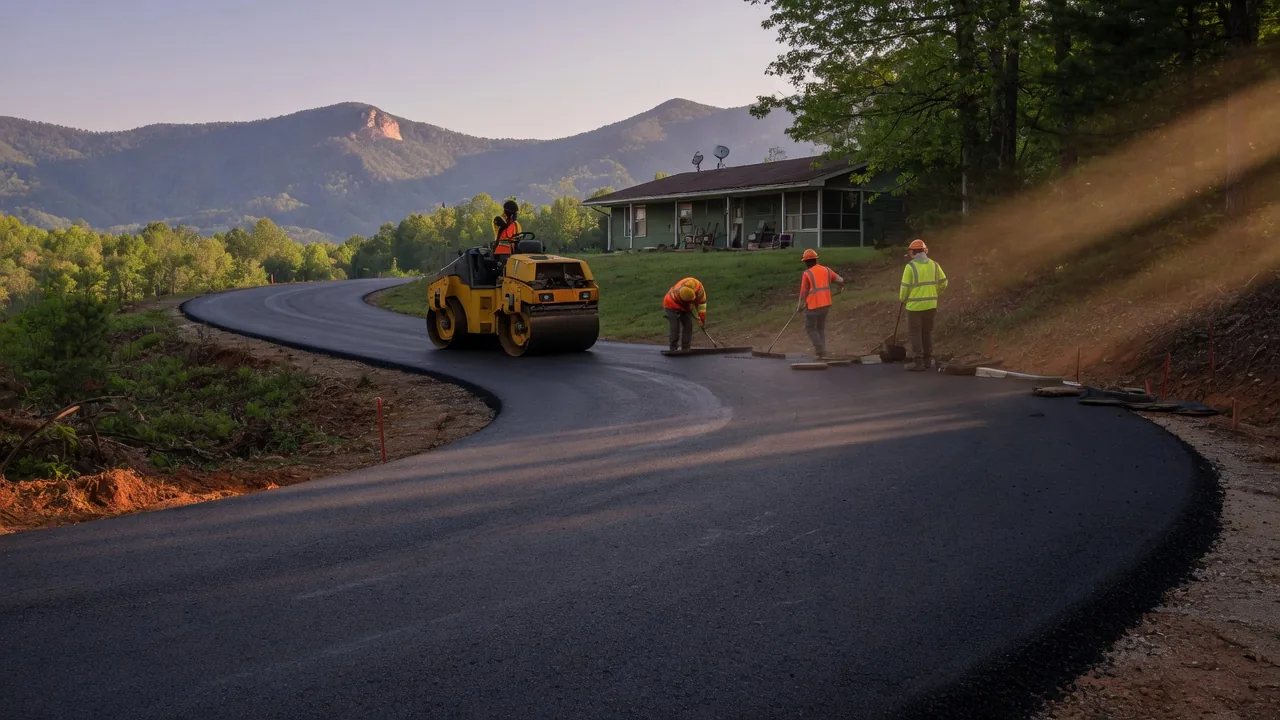
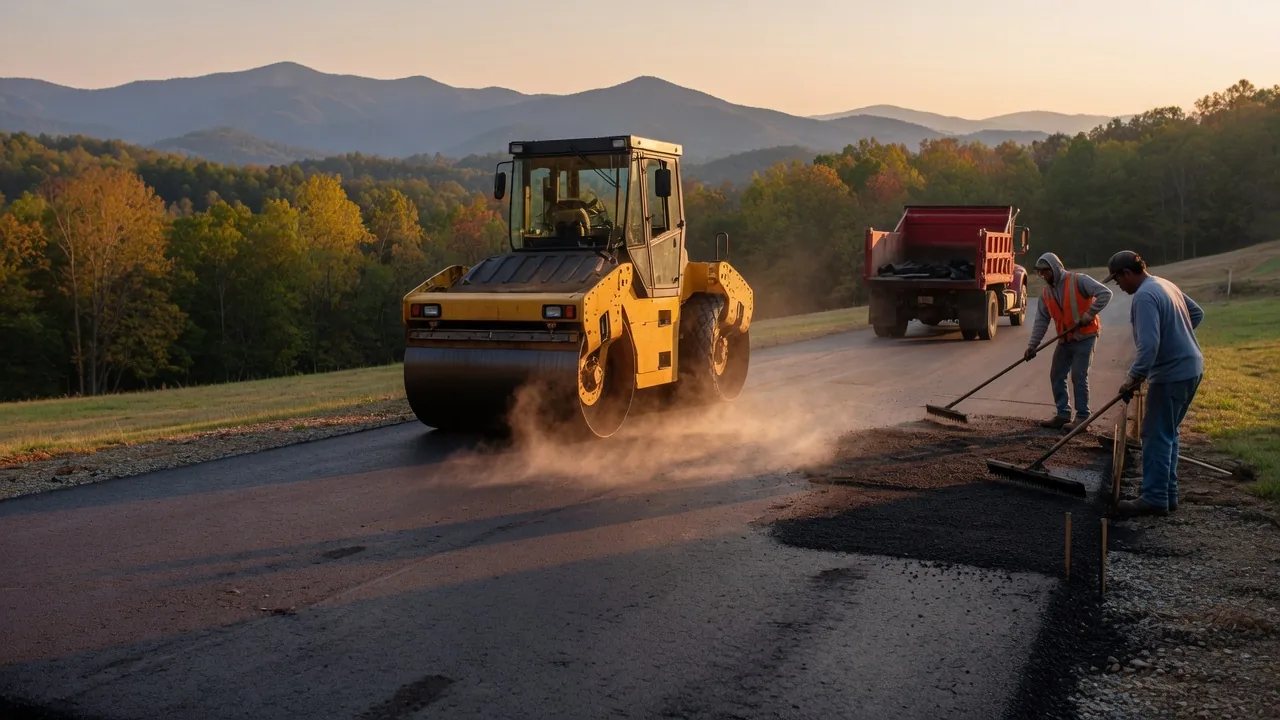
Canton is one of the few small towns in Western NC that has run a major industrial facility continuously for more than a century. The Evergreen Packaging paper mill operates along the Pigeon River, and the heavy truck routes that serve it pass through residential neighborhoods built for much lighter traffic. Driveways near those corridors absorb vibration and road debris that flatland suburban streets never approach — pavement that would hold a decade in a quieter town shows cracking and surface oxidation well before that in Canton's mill neighborhoods.
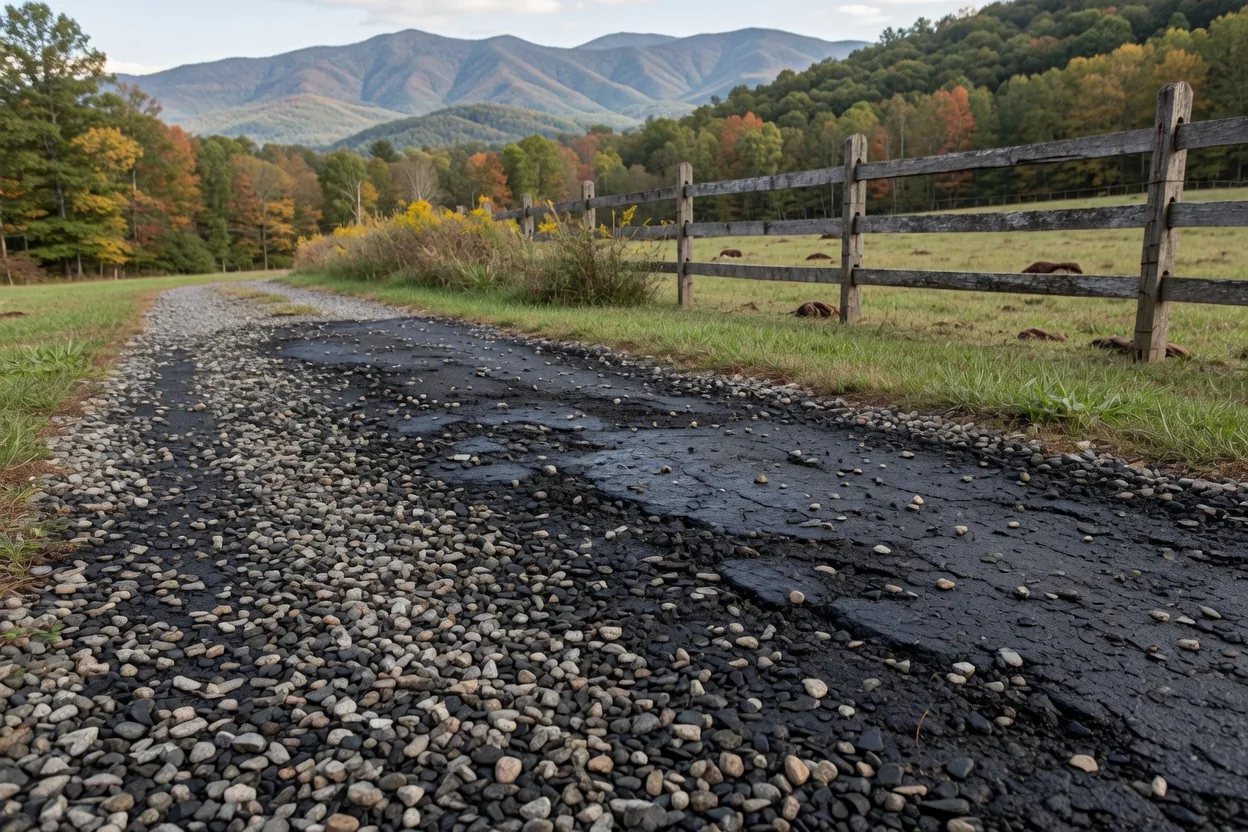
Haywood County's elevation compounds the problem. Canton sits in a river valley with ridgelines rising sharply on all sides, pushing the area into more freeze-thaw cycles each winter than the Piedmont gets. Water works into unsealed surface cracks, freezes, and expands, widening those cracks until the base course is compromised. The housing stock adds another variable: older homes near the river sit on driveways poured decades ago, while newer construction uphill involves steeper grades where drainage patterns make surface care especially important. The sealcoating overview explains what the process does in any climate — in Canton, the stakes for getting it done on schedule are simply higher than in most NC towns.
What the job costs in Canton and Haywood County
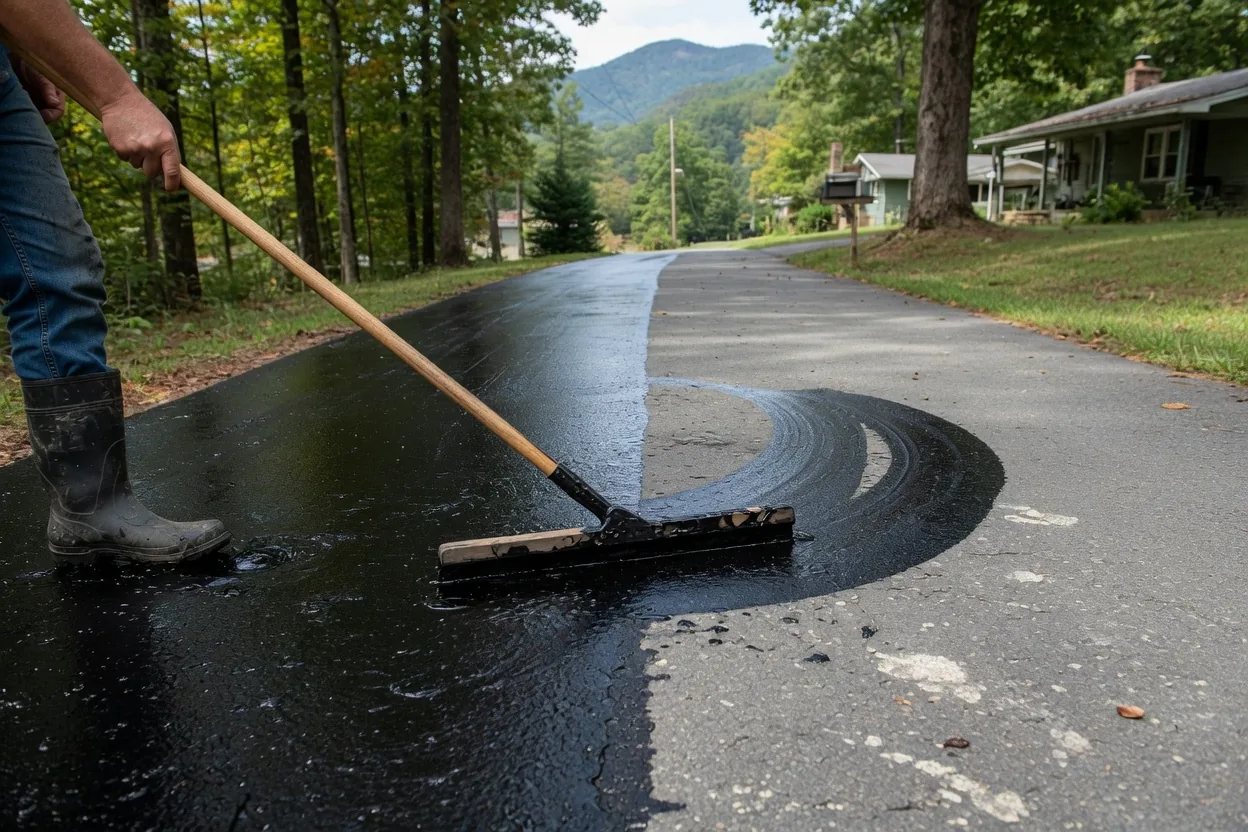
Standard residential sealcoating in this area prices at roughly $0.18 to $0.35 per square foot. Surface condition, coat count, and whether crack fill is needed drive the number within that band. The full regional cost breakdown carries line-item ranges; the table below covers the common scope tiers for Canton driveways.
| Scope | Typical range |
|---|---|
| Single-car driveway, two coats (approx. 400–600 sq ft) | $90–$210 |
| Two-car driveway, two coats (approx. 1,000–2,400 sq ft) | $350–$850 |
| Crack fill before sealing | +$75–$200 depending on extent |
| Sloped driveway, access or setup surcharge | Toward upper end of range |
| Edge definition or apron border work | +$50–$150 |
Two factors push Canton jobs toward the upper end of that range more consistently than comparable work in flatter parts of the state. First, most driveways here benefit from two coats rather than one — a single coat in freeze-thaw territory doesn't last a full three years, and the second application is where the durability comes from. Second, older driveways in the mill neighborhoods often need crack fill before any sealer will adhere properly. That prep shows up as a separate line in an honest quote, not buried in the per-foot rate.
Quotes that bundle assessment, prep, and sealing into a single undifferentiated number are harder to compare and often obscure what gets skipped. Separate line items let you understand exactly what you're buying and what the contractor is committing to deliver.
Storm history and what it means for surface water
Haywood County has accumulated 19 federal disaster declarations spanning 1973-2026, the majority from storm and flooding events that concentrate in the Pigeon River corridor. Each cycle leaves sediment and standing water on driveway surfaces, and that moisture works into unsealed cracks faster than it drains off a properly coated surface. The National Weather Service mountain division data for this region shows sustained precipitation patterns that make water management a first-order concern for anyone expecting their driveway to hold up past five years.
The practical consequence: if your driveway has open cracks and your lot grade pushes runoff toward the asphalt rather than away from it, sealcoating alone doesn't solve the problem. Water that infiltrates the base course lifts asphalt from below — no sealer bonds to a substrate being hydraulically undermined. The drainage question comes first. A contractor who asks about your property's grading before quoting is one who understands the job; one who doesn't is one who may be back in two years for a larger scope.
After any significant storm, walk the perimeter of your driveway and check whether the edge seal held. Driveways bordered by grass lose their protected lip when soil erodes under the asphalt edge, and that exposed margin is where infiltration begins. Catching it early costs a fraction of what base repair runs once water has been working underneath for a full season.
Timing the coat — mountain rules differ from piedmont
New asphalt needs time to cure before sealcoating can bond correctly. In Canton, the mountain climate extends that cure window beyond what most manufacturers' spec sheets anticipate — those documents were written for lower elevations with warmer overnight temperatures. Cool nights at Haywood County's elevation slow the offgassing of light oils in fresh asphalt, and sealing before that process completes traps oils in the surface, preventing adhesion. The result looks fine for a few months and then peels. The full guide at how long after paving to sealcoat covers the timing by season and temperature range — for Haywood County, the operating rule is a minimum of 90 days after paving and a scheduling target of late spring through early September.
Existing driveways need to be sealed before October to give the coat adequate cure time ahead of the first hard freeze. A sealcoating job that goes down in late October or November in Canton — when overnight temperatures are already dropping into the 30s — may never fully bond. It lifts and peels the following spring, leaving the surface worse than before the application. Fall sealing is possible but narrow: it requires checking the extended forecast and understanding the cure-temperature window, not just the air temperature on the day of application.
Permits, NCDOT roads, and hiring the right crew
Sealing an existing driveway within its current footprint is maintenance — it doesn't trigger permit requirements from the town or the state. But driveways that connect to NCDOT-maintained roads, including stretches of NC 19, NC 110, and US 74 near Canton, require a driveway permit before any work that widens the apron or alters the curb cut. The application goes through NCDOT Connect — discovering the requirement after work has begun creates scheduling and liability complications that delay the job and add cost. Sealing within the existing footprint doesn't cross that threshold; changing the footprint does.
Town-maintained streets in Canton follow a separate authority, and a contractor with regular work in Haywood County should know which roads are NCDOT jurisdiction and which are local — that's a baseline competence question worth asking before you sign anything. Beyond permitting, a crew worth hiring in this market will walk your driveway before quoting and ask where you've noticed softness, cracking, or drainage issues. They'll identify which cracks need fill and which indicate base failure rather than surface wear. The difference between a sealcoating conversation and a repaving conversation shows up in how that contractor explains what they found — not just in the final number.