Mountain grades and why they change the calculus
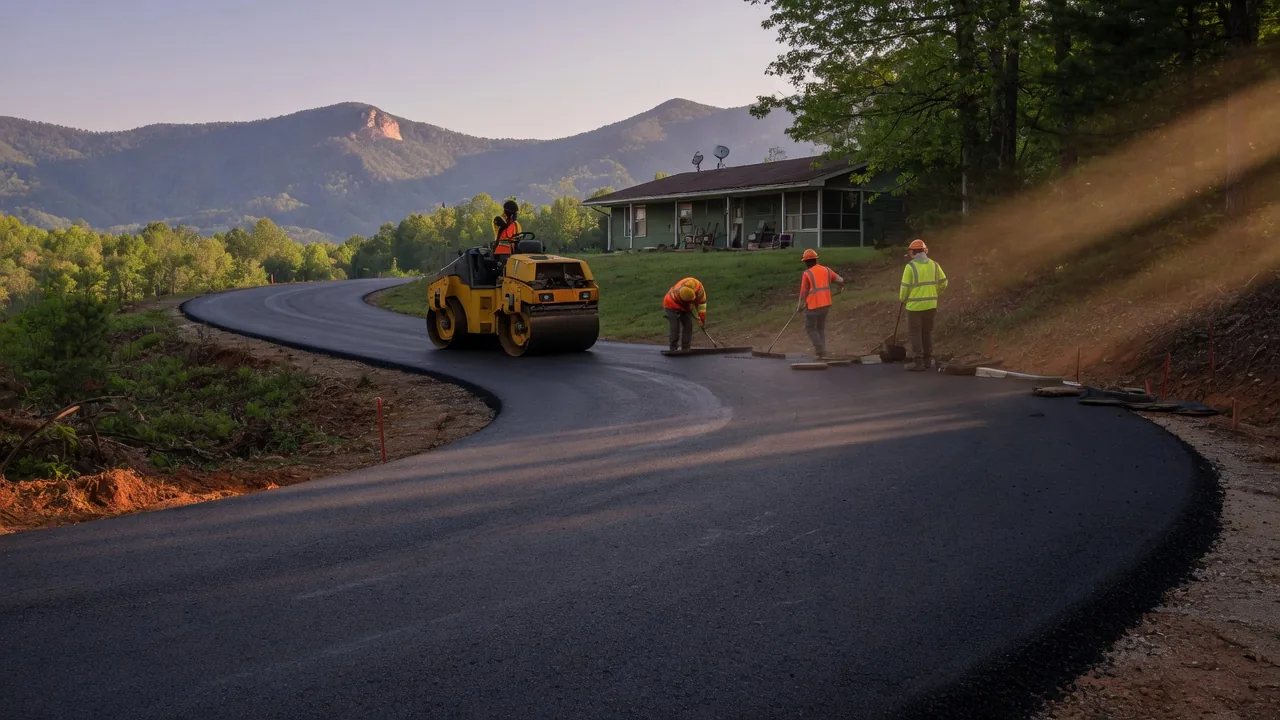
Asheville's residential driveways run steep. From the long pulls off Merrimon Avenue into North Asheville neighborhoods to the switchback approaches above West Asheville, grades that would be exceptional in the Piedmont are routine here. Tar and chip handles that grade differently than plain asphalt does: the embedded aggregate gives the surface texture that grips on inclines where smooth blacktop softens and sheds traction in summer heat. That practical advantage is one reason tar and chip keeps appearing on mountain driveways long after it fell out of favor in flat-county markets.
The same terrain concentrates water. A heavy storm sends runoff down cut-and-fill lots in ways that erode unprepared subgrades quickly. Buncombe County and the surrounding mountain region have seen 19 federal disaster declarations over 1973-2026 — most of them water events that stress drainage infrastructure at every driveway apron and culvert. Any tar and chip installation on a sloped lot that skips the grading and drainage conversation is pricing against reality. Treating surface work and drainage as two separate phases — drainage resolved first — is what separates installations that last from those that fail within a few seasons. The aggregate texture holds up only when what sits beneath it is stable.
Scope and cost across Buncombe County jobs
Most Asheville-area tar and chip projects price within the ranges detailed on the full cost breakdown page. Surface material and labor together typically run $3.50 to $6.50 per square foot, with base prep and drainage work priced as separate line items when a lot requires them.
| Job type | Approximate size | Typical range |
|---|---|---|
| Single-car driveway, flat lot | ~800 sq ft | $2,800–$5,200 |
| Standard residential driveway | ~1,000 sq ft | $3,500–$6,500 |
| Two-car or extended, moderate grade | ~1,500 sq ft | $5,250–$9,750 |
| Long driveway, steep grade | ~2,500 sq ft | $8,750–$16,250 |
Jobs involving a meaningful slope, a new culvert, or significant regrading treat the base-prep line as load-bearing, not optional. A Buncombe County driveway with proper drainage installed correctly holds a tar and chip surface far longer than a budget job that cut that step.
What a mountain installation actually involves
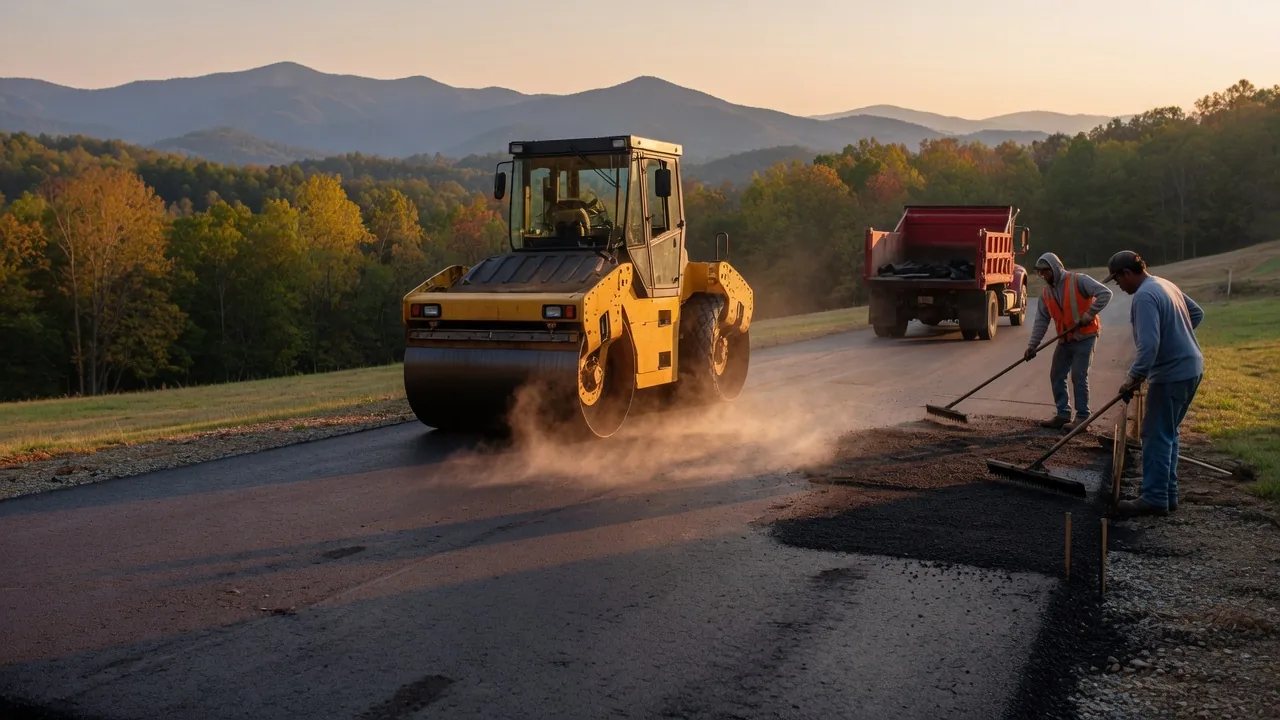
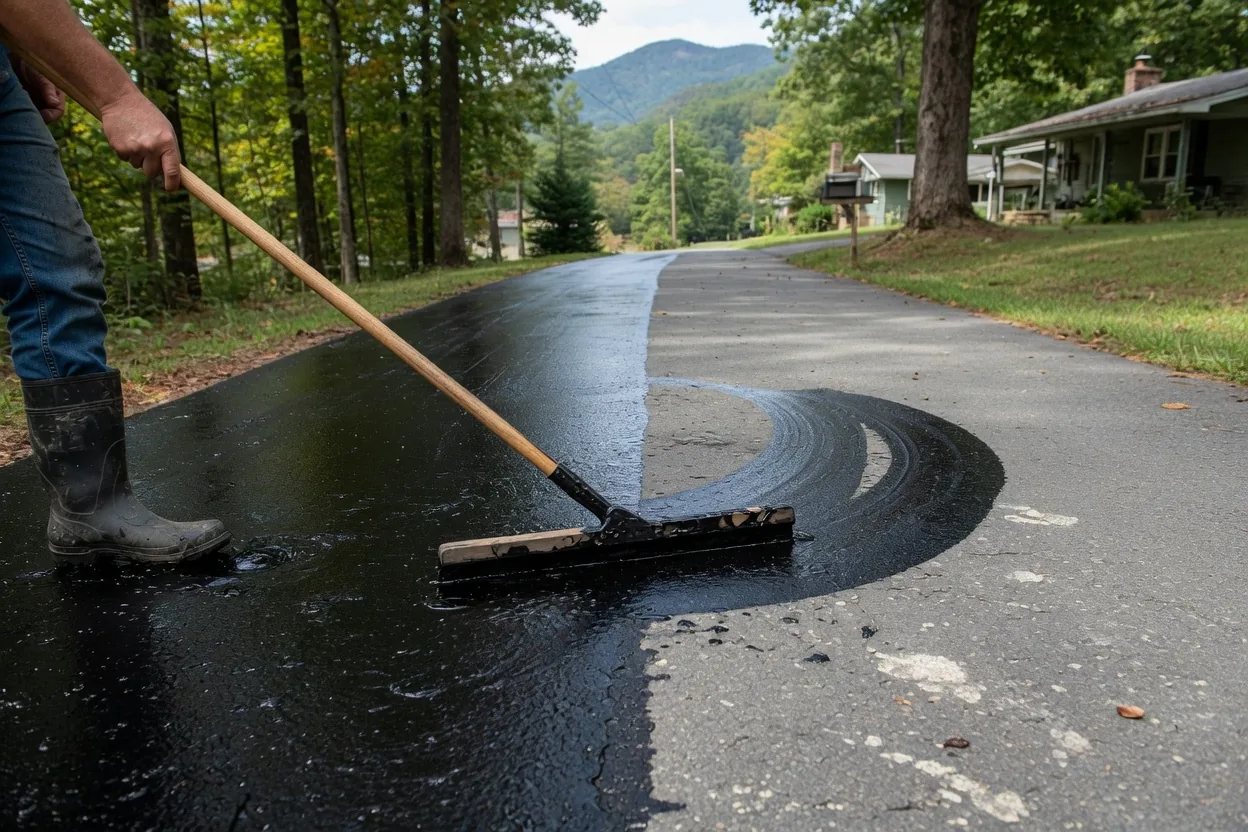
Tar and chip is a hot-applied process: the asphalt binder goes down at temperature, and the aggregate gets rolled in while it is still workable. Asheville's elevation and the temperature swings that come with it matter at both ends of that window. Curing on a mountain lot in October behaves differently than the same product laid in July in the Piedmont, and a crew that has not worked at elevation tends to underestimate how quickly the binder cools in autumn weather.
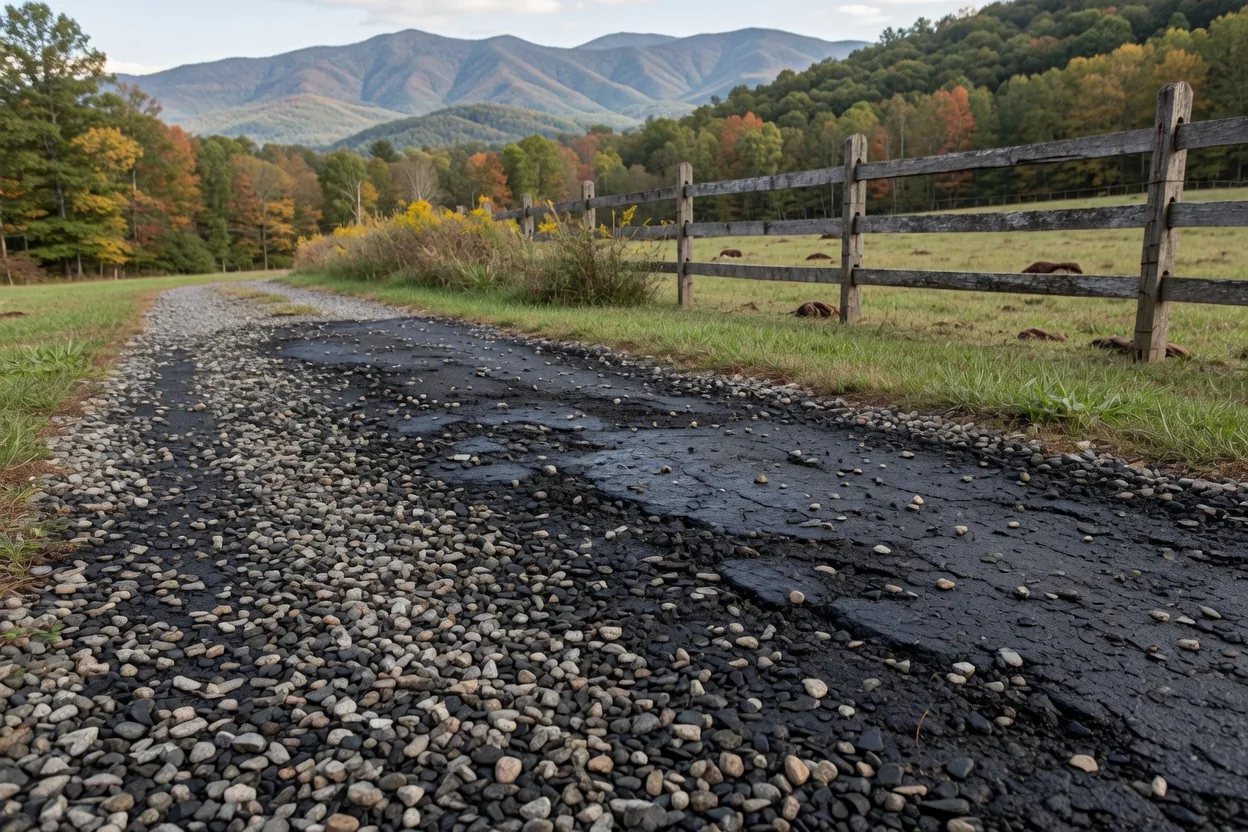
Aggregate selection is the other mountain-specific variable. Stone used on a Blue Ridge driveway should be evaluated for freeze-thaw resistance; aggregate that performs well in coastal counties can ravel faster when it cycles through hard winter freezes. The NC Department of Transportation publishes specifications for aggregate used in surface treatments on state roads — those specs are a useful benchmark when a homeowner asks what standard the material is held to, and any contractor unwilling to answer that question is giving you information worth noting.
Base prep is not negotiable on a Buncombe County grade. A compacted gravel base, proper drainage crown, and a functioning culvert or swale at the foot of the driveway slope are what keep a tar and chip surface looking right in year five and year ten. If you are converting an existing gravel driveway to this surface, the gravel conversion page covers what prep work carries over and what does not — a sound base can save significant excavation cost; a poorly graded one may require more work than starting fresh.
Permits and road connections in Asheville
Driveways that connect to a state-maintained road in North Carolina require an encroachment permit from NCDOT before construction begins. Buncombe County has roads that shift from state maintenance to city or county maintenance within short distances of each other, and knowing which agency controls your road apron determines where you file. Applications for new or modified driveway connections to state roads go through NCDOT Connect; driveways off city-maintained streets in Asheville go through the City of Asheville permitting office. Projects in unincorporated Buncombe County may follow county standards instead.
The permit question is most relevant when a driveway is new or when resurfacing involves changing the apron geometry. A reseal of an existing tar and chip surface that does not alter the connection footprint typically does not trigger a new permit — but confirm with your installer before work starts. Unpermitted driveway construction can result in required removal at the owner's expense, which makes the upfront step worth the time.
Hiring the right crew for this terrain
Three questions separate a competent mountain paving crew from one that has worked only in flat markets: whether they have laid tar and chip on a grade, whether they calibrate their binder application rate for autumn mountain temperatures, and whether they discuss drainage before they discuss material. The answer to the third question is the most revealing.
Asheville's established neighborhoods — West Asheville, Kenilworth, Norwood Park, North Asheville — tend to have older properties with mature drainage patterns already working around the house. A crew that resurfaces without understanding where the water goes can inadvertently redirect runoff toward a foundation or a neighbor's lot. The tar and chip overview page explains what a proper site assessment covers before a crew ever opens a valve.
When comparing bids, ask each contractor to break out base prep and drainage as separate line items from the surface work. A quote that bundles everything into a single per-square-foot rate is either assuming the base is perfect or planning to skip the assessment — and on a Buncombe County slope, the base is rarely perfect.