The Weaverville driveway that outgrew its gravel
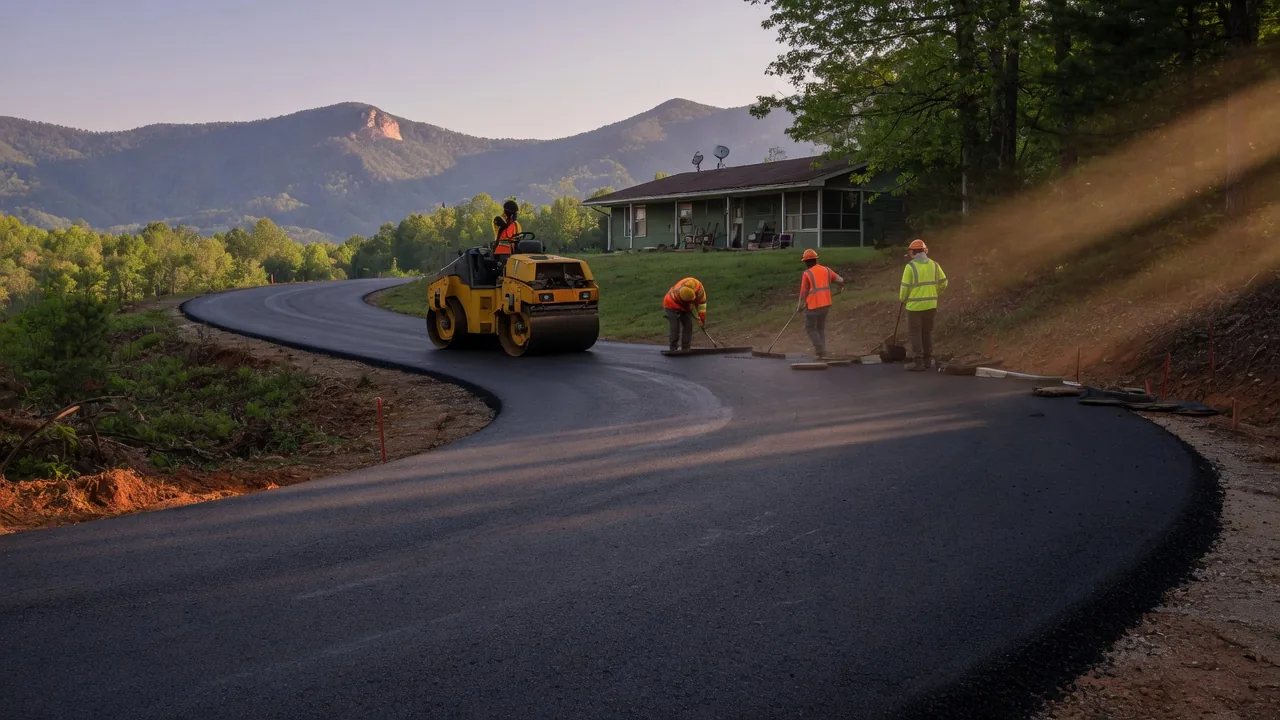
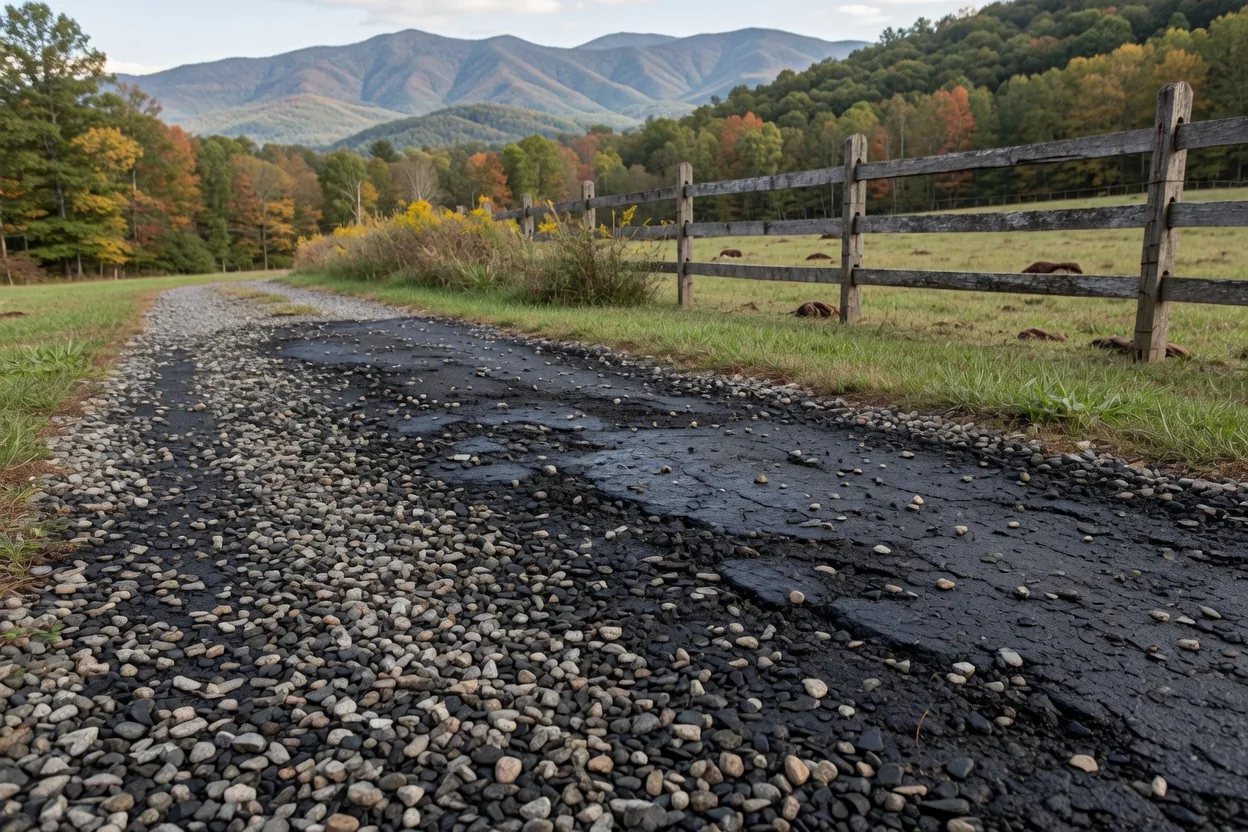
The terrain north of Asheville shaped how people built driveways for generations. Lots along Reems Creek Road, out past Lake Louise, and up the hollows approaching the Newfound Range were developed when gravel was the practical answer: cheap to grade, easy to top-dress, and forgiving on slopes that would break a concrete form. Weaverville's growth over the past two decades changed that equation. As lots subdivided and daily traffic intensified on those same approaches, loose stone began migrating downhill, pooling at curb cuts, and leaving spring ruts that needed attention every year. The gravel math stopped working.
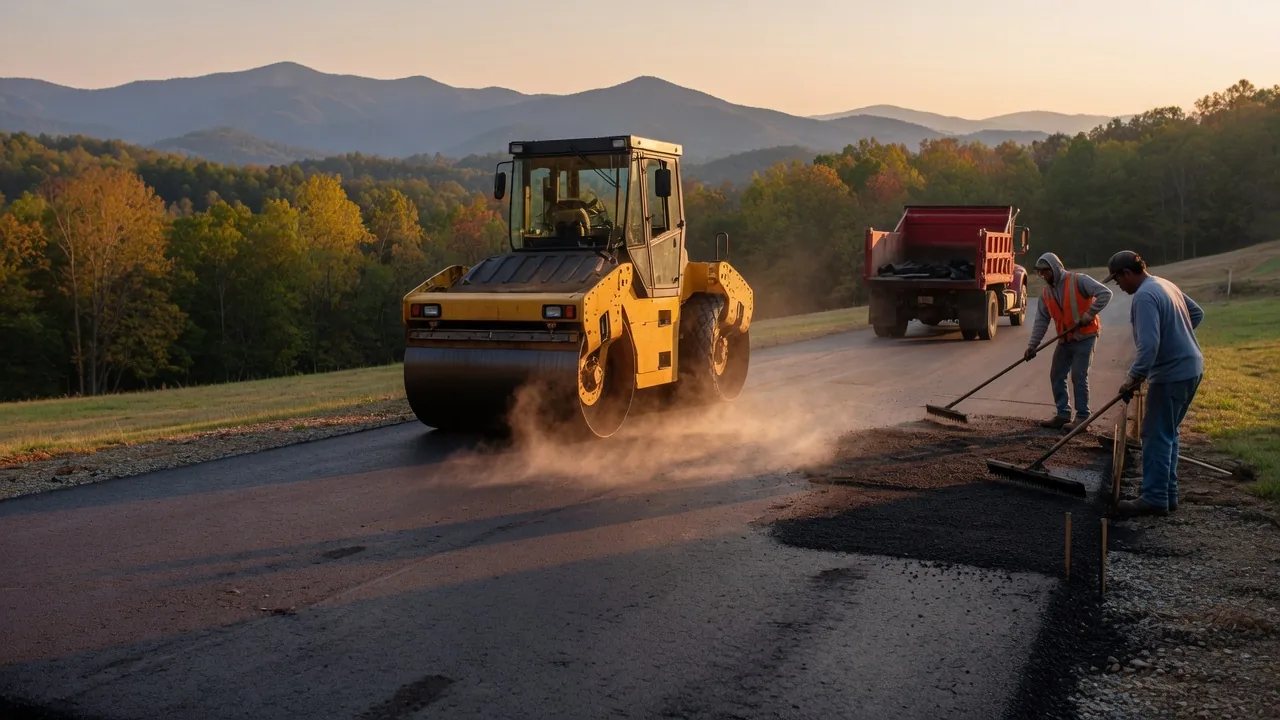
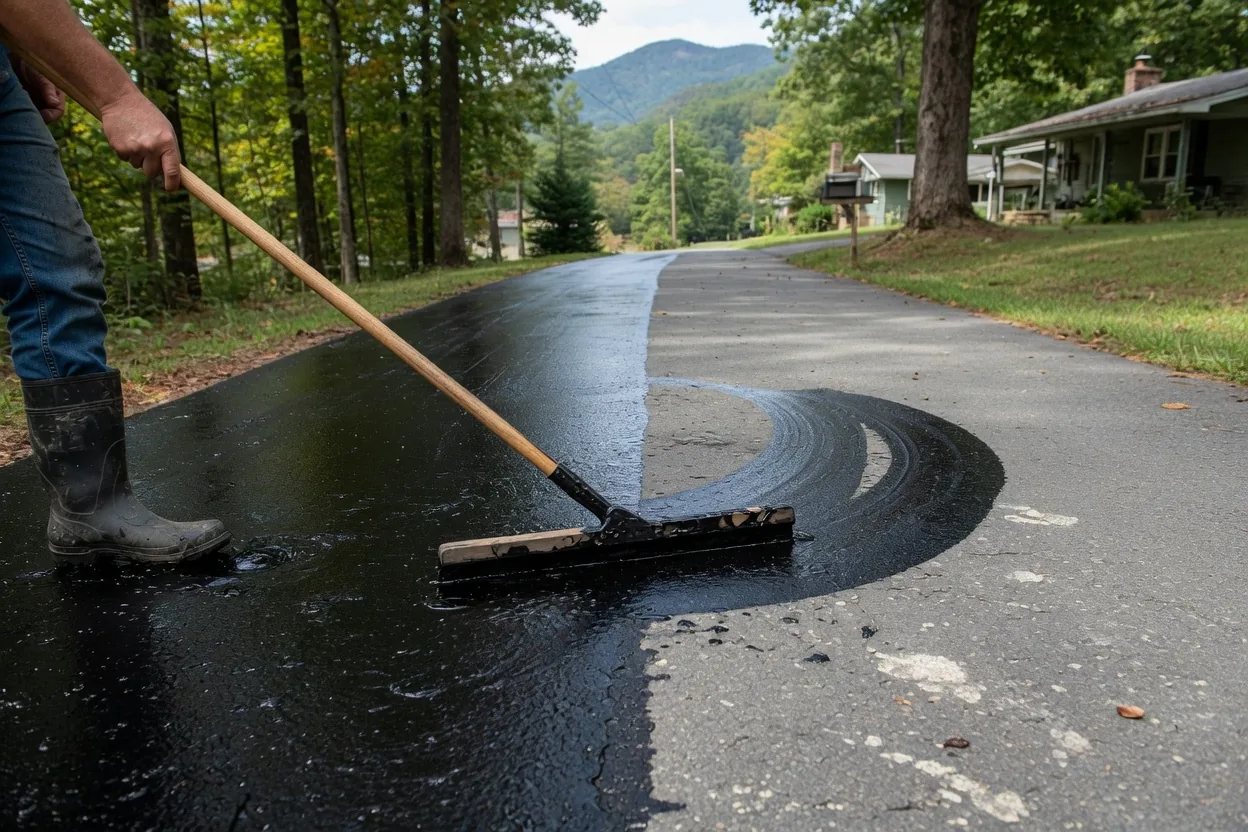
Tar and chip — properly called chip seal — is the natural next step for these driveways. A contractor pours a hot liquid asphalt base course over the prepared surface, then rolls aggregate into it before it sets. The result is a textured, sealed surface that handles grade changes without cracking the way smooth asphalt does on sharply sloped approaches, and it reads as natural stone rather than suburban blacktop. For Weaverville lots with long rural approaches, it closes the gap between a gravel drive and a full asphalt install at a cost that reflects the difference. See the full tar and chip overview for process details; the key point locally is that this surface was built for terrain like Weaverville's.
What a Weaverville tar and chip job actually costs
Most tar and chip work in and around Weaverville falls between $3.50 and $6.50 per square foot installed, which puts a 1,000-square-foot driveway in the $3,500–$6,500 range before any drainage or access work. The three variables that move a quote are slope, base condition, and job size. Steep-grade driveways need thicker oil application and sometimes additional aggregate to bond properly. Driveways converting from gravel with a solid compacted base come in at the lower end; new installs on soft or ungraded sub-base need prep work that appears as a separate line item.
The full working table is at the tar and chip cost guide, but here is a quick scope-to-range breakdown for Weaverville-area jobs:
| Job scope | Per sq ft | Typical 1,000 sq ft total |
|---|---|---|
| Gravel conversion, solid compacted base | $3.50–$4.50 | $3,500–$4,500 |
| New install on graded sub-base | $4.00–$5.50 | $4,000–$5,500 |
| Steep grade (>8%) or drainage correction included | $5.00–$6.50 | $5,000–$6,500 |
Jobs with both a steep grade and a soft base can stack toward the top of the range; a job with neither will often land near the bottom. Neither condition is rare on Weaverville lots — ask which one yours is before you evaluate any bid.
How Buncombe County winters move a chip seal
Buncombe County's weather record is relevant to any surface you put in the ground. 19 federal disaster declarations touch this county over 1973-2026, most of them storm and flooding events that stress drainage at the base of sealed driveways rather than at the surface itself. The practical concern for chip seal is freeze-thaw cycling: mountain elevations around Weaverville see enough temperature swings between November and March that moisture working into a poorly bonded surface can push aggregate loose over time. The National Weather Service classifies western NC as a distinct mountain zone with more freeze-cycle exposure than the piedmont, and a chip seal job in this area needs to account for that.
The fix is not exotic: proper drainage grades, a dry application window (hot oil does not bond reliably over wet aggregate), and a base course that does not hold standing water. Contractors who work primarily in flatland markets east of Asheville sometimes miss the cross-slope requirements that mountain lots demand. Ask specifically whether the quote includes a drainage grade built into the finished surface — it matters here in a way it simply does not on level ground.
State-road frontage and the permit it triggers
A significant share of Weaverville's rural driveways exit onto roads maintained by the NC Department of Transportation rather than the town or county. When a driveway connects to a state-maintained road — NC 251 along the French Broad corridor, or sections of Reems Creek Road north of town, for example — an access permit from NCDOT is required before any new or substantially altered driveway construction begins. The application process runs through NCDOT Connect and covers sight distance, approach grade, and drainage pipe sizing at the road edge.
For a simple gravel-to-chip-seal conversion that does not change the driveway footprint at the road, the permit threshold is lower and may involve a notification rather than a full review. A new installation or a widening that alters how water drains off the approach is more likely to require a full permit. Your contractor should be able to tell you which category applies before the first shovel moves — if they cannot, that is a gap worth resolving before any oil is poured.
Reading a bid before you sign it
A tar and chip quote that does not list base preparation separately is not a complete quote. On Weaverville lots — especially those converting from gravel with years of uneven top-dressing — base condition varies in ways that a quick visual inspection misses. A contractor who prices the job from the street is guessing at the part of the work that drives the most cost. A proper scope includes a walk of the full driveway length, a note on where grade changes occur, a line for drainage correction if needed, and a separate item for any soft-base repair before the oil goes down.
On slope, ask specifically how the contractor handles the transition at the road — the point where your driveway grade meets the street. That transition is where chip seal most often fails first on mountain driveways, and the answer tells you whether the crew has worked terrain like Weaverville's before. If you are comparing this surface against full paving, the gravel-to-asphalt guide lays out where the trade-offs land; the cost guide goes deeper on what each line item should and should not include.