What the grade decides before the quote does
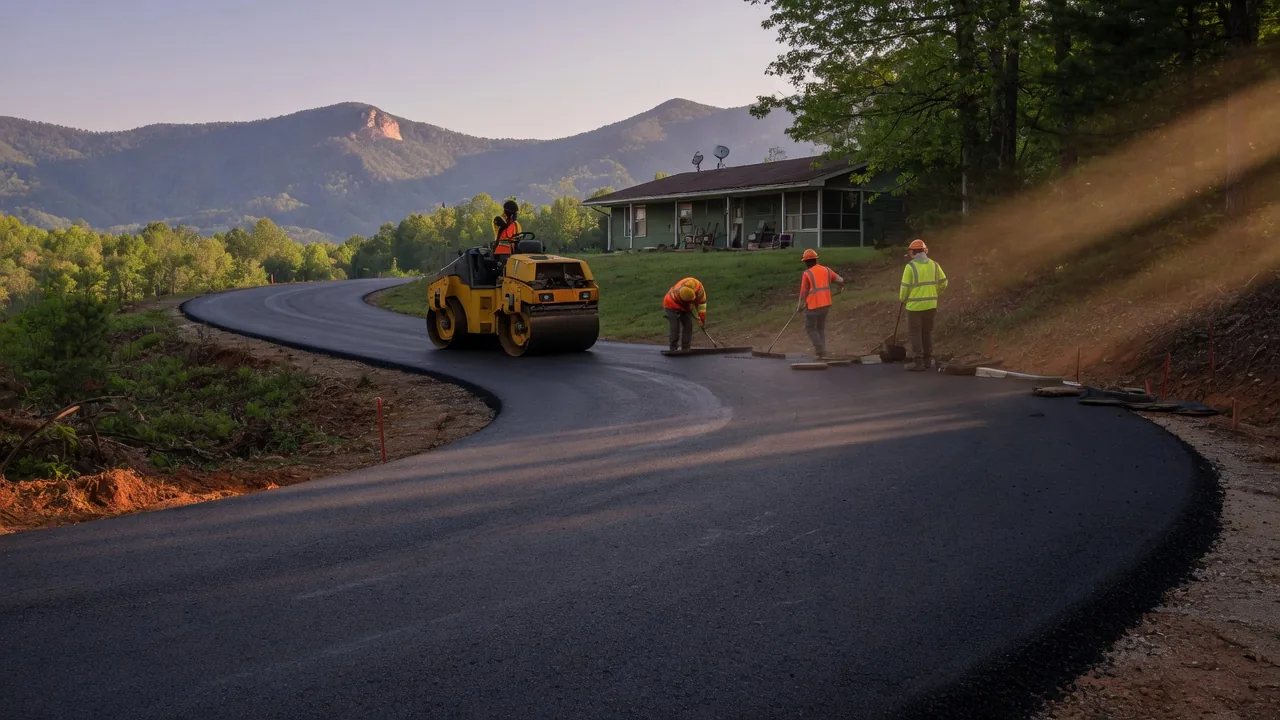
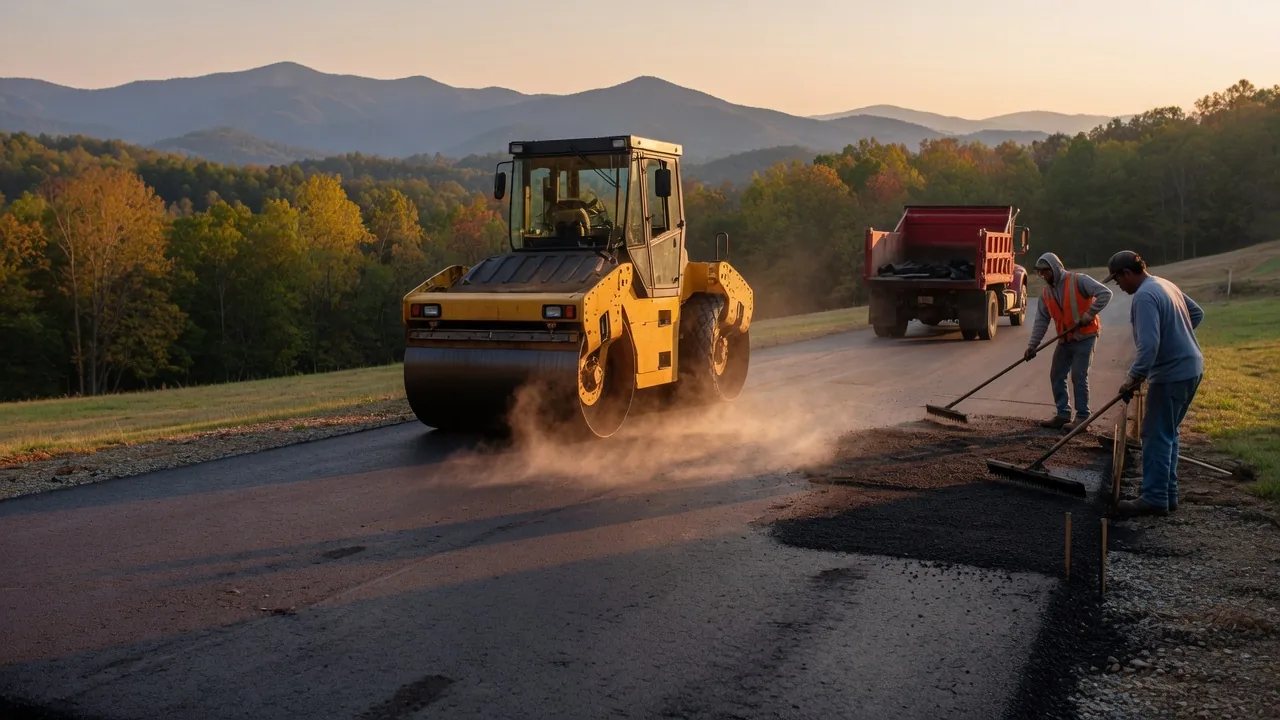
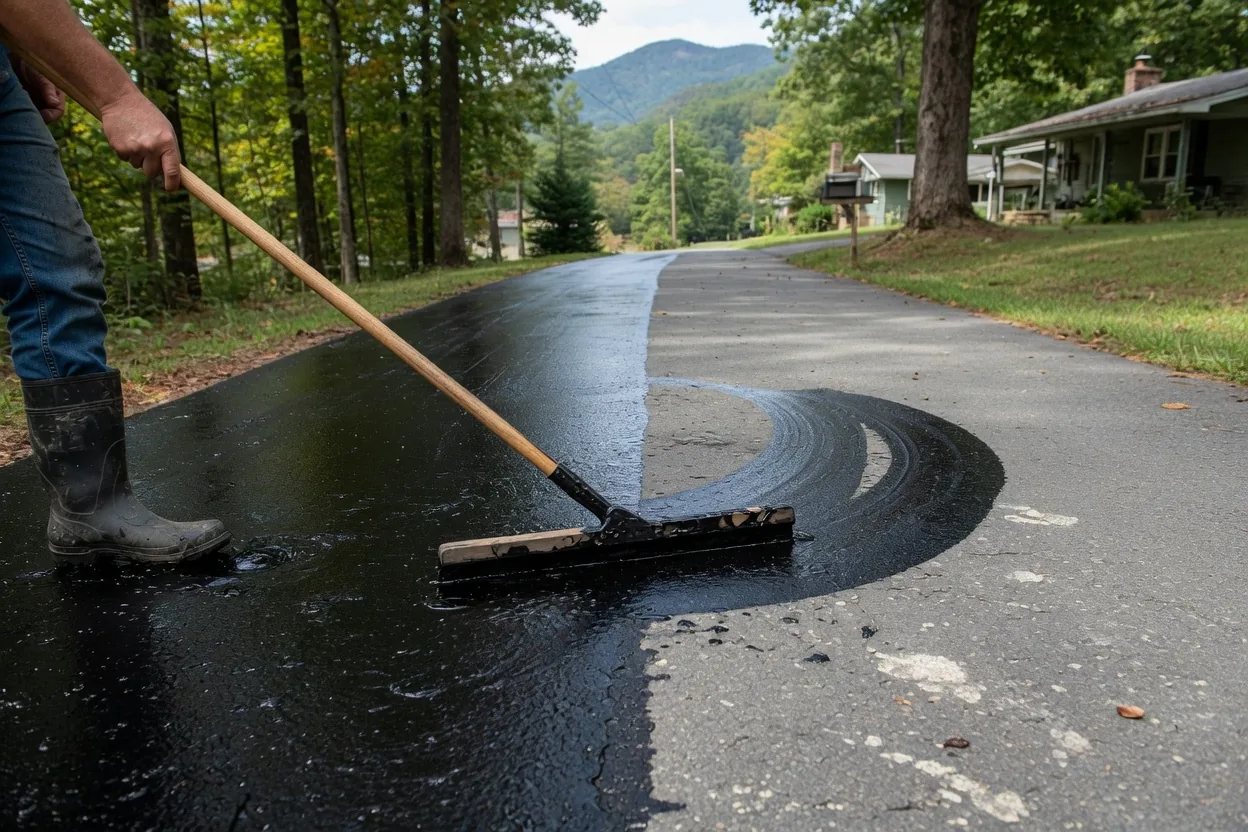
Buncombe County driveways rarely sit on the flat, well-drained lots that national cost guides assume when they publish asphalt resurfacing cost figures. A steep pull-in off a switchback road near Swannanoa, a downhill run from a ridge-lot house above Weaverville, a sloped pad in North Asheville — these are the norm here, not the exception. That grade changes the cost question in one specific way: water moving downhill under the pavement can quietly undermine the stone base over seasons, converting what looks like a surface cracking problem into a structural one. A 1.5-inch overlay applied over a saturated or eroded base on a grade will not last three years. An overlay on a sound, dry base on the same slope can perform as well as one on level ground.
The slope is not itself the disqualifier. What the slope does to the base over time, and whether that process is already underway when you call for a quote, is what separates a $2,500 overlay from a full-depth replacement. Every honest asphalt resurfacing cost estimate in this county starts with that base read, not with square footage.
The same 600-square-foot driveway in Woodfin and in south Asheville can carry quotes $800 apart on prep alone if one has grade drainage issues and the other doesn't. That spread doesn't mean one contractor is overcharging; it means they read the lot differently. Our full overlay guide walks through what goes into an accurate quote for sloped mountain lots.
What Buncombe County driveways actually cost
The ranges below cover overlay and resurfacing work on existing asphalt. Full-depth replacement is a separate calculation; see the asphalt driveway cost guide for that comparison.
| Scope of work | Typical range | What drives it |
|---|---|---|
| Crack sealing before overlay | $150 – $500 | Crack count, extent, active movement |
| Standard overlay (1.5" mat) | $2.25 – $3.50/sq ft | Lot grade, equipment access, prep needed |
| Heavier overlay (2"+ mat, slope conditions) | $3.25 – $5.50/sq ft | Drainage corrections, spec thickness |
| Standard two-car driveway, complete | $1,800 – $4,800 | Total area, prep work, mix spec |
Those ranges assume a structurally sound base. If prep reveals soft spots, broken edges, or standing water under the pavement, expect additional work before the overlay price applies. A contractor who quotes a firm number without walking the site is pricing assumptions, not your driveway.
Reading the base before you commit to an overlay
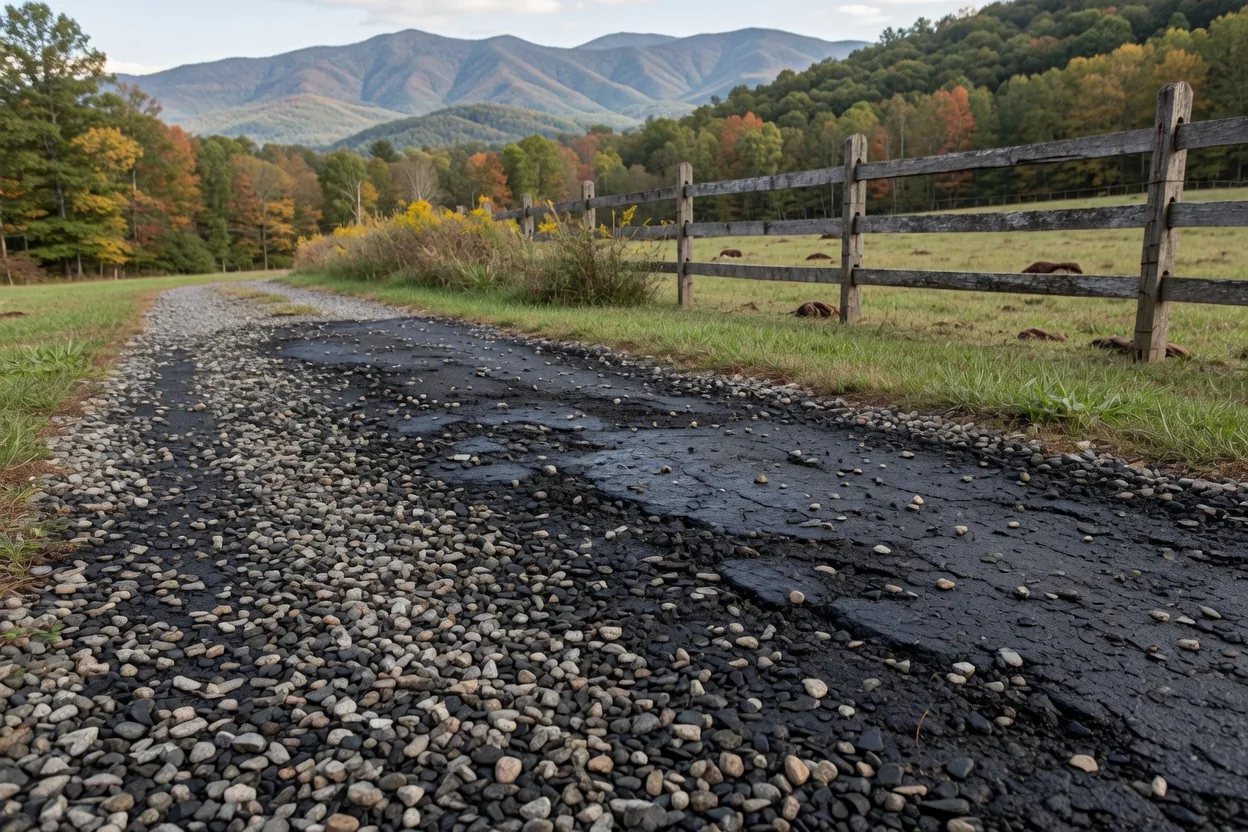
Three observable conditions decide whether a driveway qualifies for an overlay or needs full-depth work. Alligator cracking (the broken-tile pattern across wide areas) means the base has lost load-bearing capacity and an overlay will mirror the failure within a season or two. Edge heaving, where the pavement has lifted and separated along the grade, points to base soil movement that a surface mat will not fix. Drainage pooling after rain, especially on the uphill side of a sloped driveway, signals that water is already working under the surface.
Any one of those conditions tips the job toward base repair or replacement before an overlay goes down. A proper overlay starts with base prep, not a mat. A bid that doesn't account for what is underneath is pricing the easy part and ignoring the part that calls you back in two years.
A legitimate base inspection looks like this: the contractor walks the full driveway, checks edges for separation, probes suspected soft spots, and asks where water goes after a heavy rain. They assess the drainage pattern around the driveway, not just the surface. That fifteen-minute walk changes the scope of the quote more than any tape measure does.
When the base passes inspection, an overlay can add meaningful service life; how many years depends on original install quality, drainage, and traffic load. Our driveway lifespan guide covers realistic expectations for this climate and terrain.
Why Buncombe County rainfall shortens the window on marginal bases
The Blue Ridge Mountains cause orographic lift: moisture-laden air pushes up the ridge line and drops precipitation on the western slopes. Buncombe County receives more rainfall than most of the Piedmont, and it arrives in heavy, concentrated pulses during summer storm season. The federal disaster record reflects that pattern — 19 federally declared disaster events have touched this county (1973-2026), with a substantial share driven by storm water and flooding. That history shows up in driveways through water infiltration from above and lateral drainage pressure from uphill terrain, factors that accelerate base erosion faster than a contractor experienced mainly in Charlotte or the Triangle might anticipate.
Freeze-thaw cycling compounds the effect. Asheville's elevation brings overnight freezes well into spring, and water that has worked into sub-base cracks expands and contracts with each cycle. A base that might hold up for several more years in a coastal climate can deteriorate noticeably faster here. The National Weather Service Greenville-Spartanburg office covers Buncombe County; its historical freeze-date records give a reasonable sense of how many thaw cycles per year local pavement endures. That cycle count is one reason overlays in this county need a stricter base inspection standard, not a looser one. A quote that skips the drainage conversation is skipping what controls the pavement's lifespan.
Permits and NCDOT access rules for Buncombe County driveways
Resurfacing an existing driveway footprint typically doesn't require a building permit. Two situations change that: widening the driveway, adding a new curb cut, or altering drainage in a way that affects a public right of way. If the project touches a connection to a state-maintained road, you may need a driveway access permit through NCDOT Connect. The NC Department of Transportation issues those permits for access points on state routes, which covers most roads outside Asheville's city limits. Inside city limits, the City of Asheville's Development Services office handles right-of-way work.
If your project is a straight resurfacing of the existing footprint with no dimensional changes, a quick call to the relevant office confirms whether a permit is required. A contractor who gives a blanket answer on permits without knowing your specific lot and road jurisdiction is guessing, not advising.
Three things to settle before signing a quote
Getting asphalt resurfacing cost to a trustworthy number in Buncombe County comes down to three questions:
- What did the base inspection find? Ask every bidder to walk the driveway with you and explain what they observed. A contractor who doesn't mention drainage or probe for soft spots isn't doing an inspection — they're measuring square footage.
- Is prep included in the quoted price? Crack filling, edge work, and grade corrections are often separate line items, not built-in assumptions. Get those spelled out before the per-square-foot number means anything.
- What mat thickness is specified? A 1.5-inch mat and a 2-inch mat are not the same job. The cost difference is real, and so is the longevity difference on a grade. Our overlay guide explains what thickness choices mean in practice for driveways with grade.
One final check: compare the per-square-foot figure against the ranges in the table above. If a bid lands materially below $2.25 per square foot for installed work in Western North Carolina, ask what it excludes. Material, fuel, and equipment costs in this region track the same market as the rest of the state.