What southern Buncombe's rainfall does to the base conversation
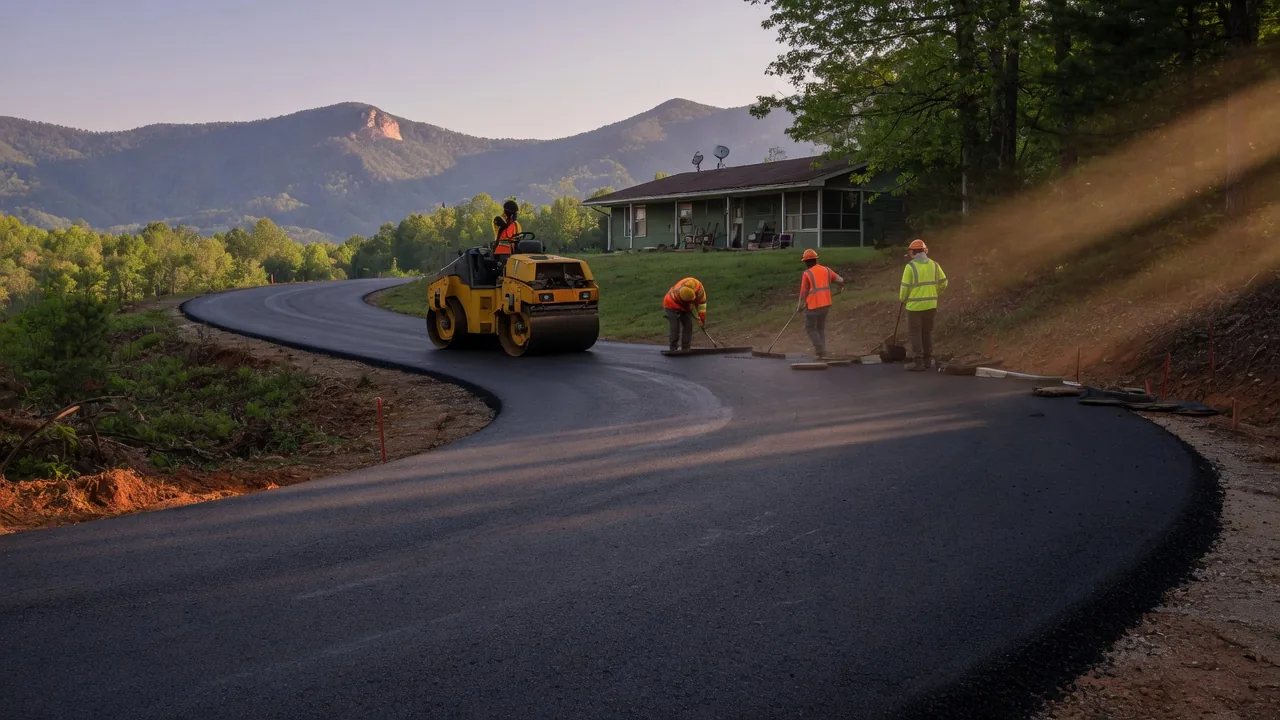
Arden sits at the southern edge of Buncombe County, a few miles from the Asheville Regional Airport and well inside the French Broad River watershed. The community's housing stock runs from older ranch homes with long gravel drives to newer subdivisions platted on gently rolling terrain — a mix that produces a wide range of driveway conditions when owners consider a move to bound surface. Western North Carolina receives some of the highest annual precipitation totals east of the Rockies, and federal disaster records for Buncombe County reflect that history: 19 declared events over 1973-2026, most of them storm and flood family. Every one of those events ran water across residential driveways.
That precipitation record changes what a quality tar and chip installation looks like here. Southern Buncombe's soils run heavy with clay — a profile that holds moisture long after a storm passes and stays saturated through the freeze cycles that flatland contractors rarely plan for. A tar and chip surface applied over a poorly crowned or edge-drained subgrade fails from underneath before the top shows a problem: the emulsion lifts, stones work loose, and the surface ages years ahead of schedule. The drainage question is not secondary here; it determines whether the rest of the job holds. See the full process overview to understand how base prep fits into a correct installation sequence.
Scope and cost for Arden driveways
Tar and chip driveways in Arden typically run $3.50 to $6.50 per square foot installed. For a standard 1,000-square-foot residential driveway, that puts the total between $3,500 and $6,500. What moves a job toward the top of that band is almost always base and drainage work, not stone selection.
| Scope | Typical Range (per sq ft) |
|---|---|
| Recoat over sound existing chip seal surface | $3.50 – $4.25 |
| New installation, minimal grading needed | $4.00 – $5.25 |
| New install with drainage prep and edge work | $4.75 – $6.00 |
| Full base rebuild, grading, culvert or French drain | $5.50 – $6.50 |
Line items that frequently appear on Arden jobs but rarely show up in template quotes: additional base gravel where existing stone is thin or clay-contaminated, edge berms to direct sheet flow away from the surface, and culvert work where the driveway crosses a drainage swale. For a full breakdown with per-line-item quantities, the cost guide has the complete range table. Homeowners converting from gravel will find the transition process covered in the gravel conversion guide, including what changes in the base and why the prep step differs from a new-dirt installation.
State road connections and the permit step
A significant share of residential driveways in southern Buncombe County connect directly to NCDOT-maintained secondary roads. That connection is a regulated point: any work at or near the apron on a state-maintained road requires an encroachment permit. The application runs through NCDOT Connect, and the permit sets standards for sight distance, culvert sizing, and how surface water at the connection must be managed. Work completed without the permit can result in a stop-work order and a requirement to restore the connection at the property owner's expense — typically a cost that exceeds the permit fee by a wide margin.
This requirement applies directly to chip seal work because binder can track onto the roadway surface if the apron is not handled correctly, and NCDOT will flag a connection that routes drainage onto the road edge. A contractor with experience in this part of the county knows which streets are state-maintained and which fall under Buncombe County or private maintenance, and they will identify the permit need before pricing rather than after. The secondary road inventory is searchable by address on the NCDOT website.
Stone size and binder grade for mountain conditions
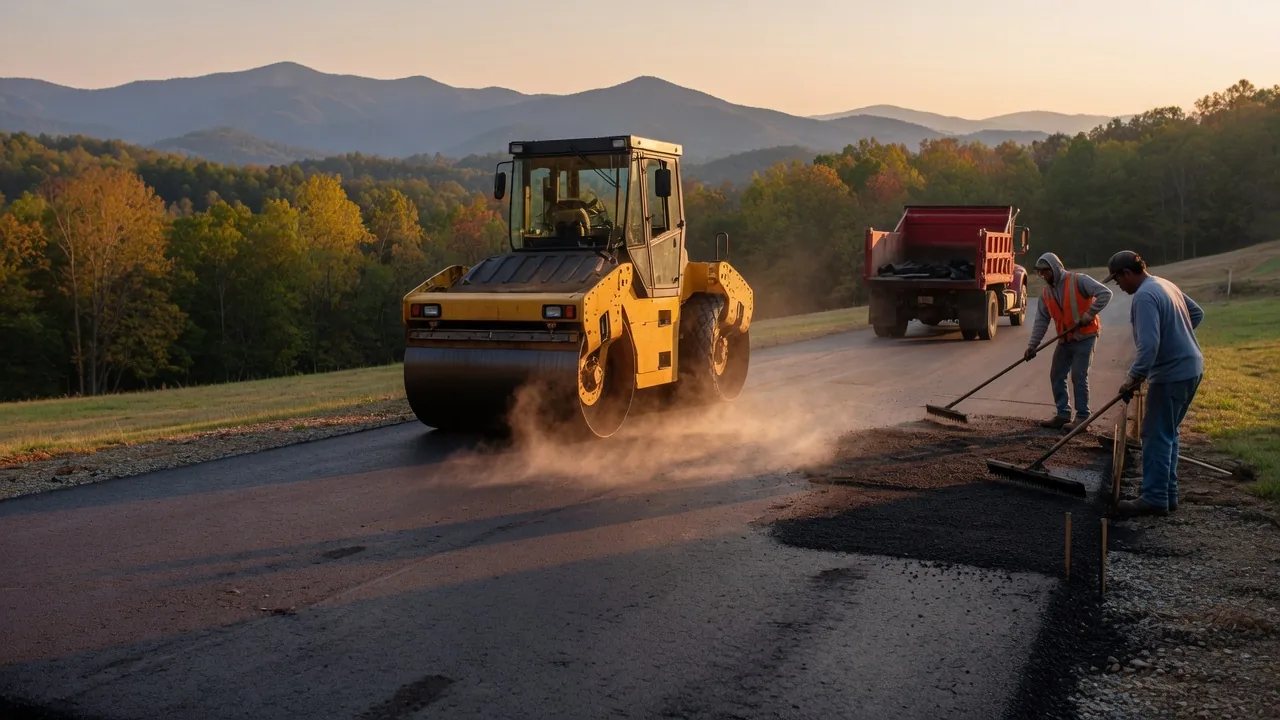
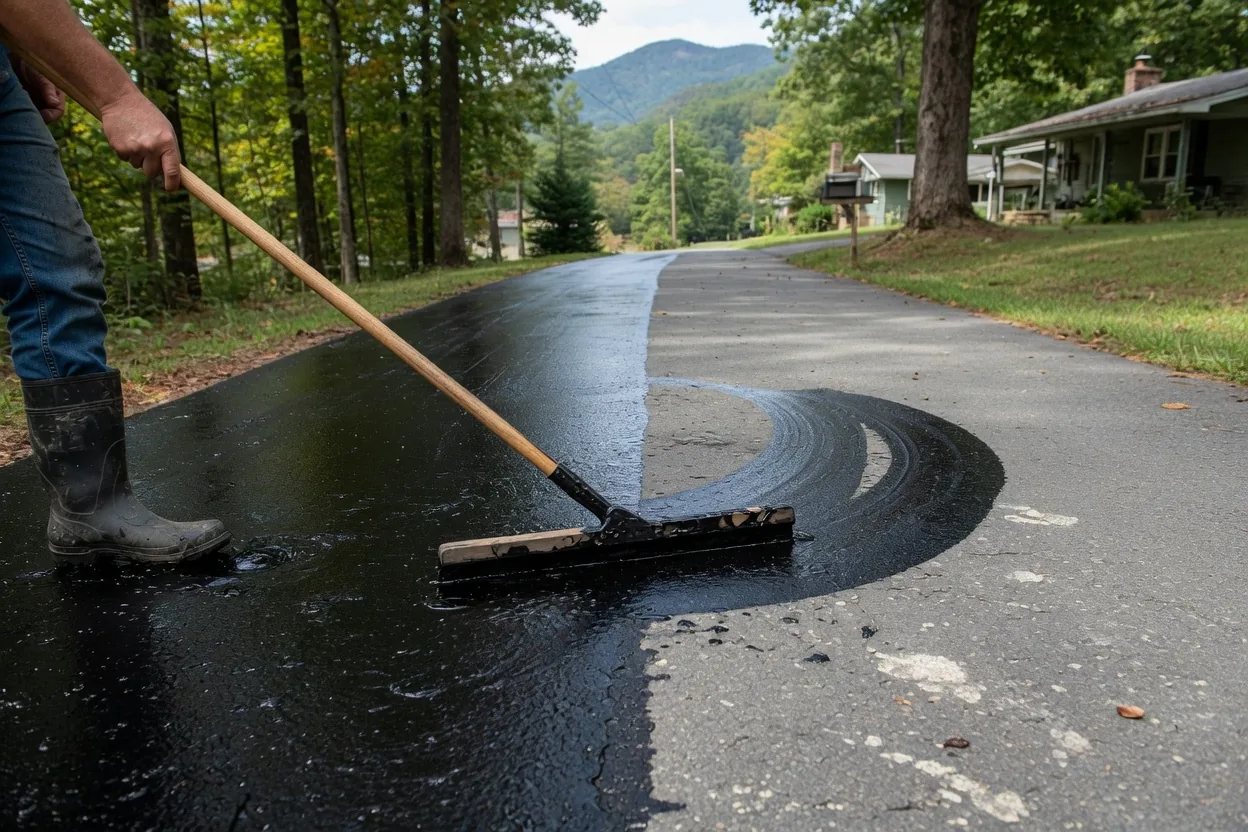
Tar and chip uses a hot-applied asphalt emulsion as its binder coat, covered immediately with crushed aggregate and compacted by roller. In southern Buncombe County, #7 or #8 crushed granite aggregate is the standard choice — small enough to seat tightly under traffic, coarse enough to maintain surface texture and allow drainage between chips. Several quarries operating in the western North Carolina region supply aggregate matched to local conditions in both gradation and seasonal weathering behavior. WNC's elevation produces more freeze-thaw cycles per winter than the piedmont, and aggregate that is not well-bonded in the binder sheds faster when that cycling works the surface.
Binder application also has a tighter weather window here than in drier, flatter markets. High-humidity summer days require precise timing: the emulsion must break and tack within a narrow window or the aggregate will not seat correctly. Contractors who regularly work Buncombe County lots know the local temperature and humidity tolerances for their materials and schedule install days accordingly. Ask about their application-day criteria before committing to a start date — a crew without a clear answer on this has likely not done many jobs in this climate.
What a complete scope looks like
A tar and chip proposal worth signing covers: existing subgrade condition and any needed base additions, crown and drainage provisions for WNC rainfall volumes, binder grade and emulsion application rate, aggregate type and gradation, connection-point treatment if the drive meets a state or county road, and curing time before normal vehicle traffic resumes. For jobs strictly contained to private property, these items stay between you and the contractor. For any scope that touches an NCDOT connection point, applicable encroachment standards also apply.
On larger jobs, or where drainage work affects neighboring properties, the NC Department of Insurance's building code standards for grading and stormwater may apply — particularly on lots where water management is not fully contained within the property line. A proposal that skips the drainage and base conversation is not a complete scope; it is a surface price that will produce a surface result. In a county where the precipitation record is what it is, that distinction is worth pressing for before anything is signed.
What the surface looks like as it ages
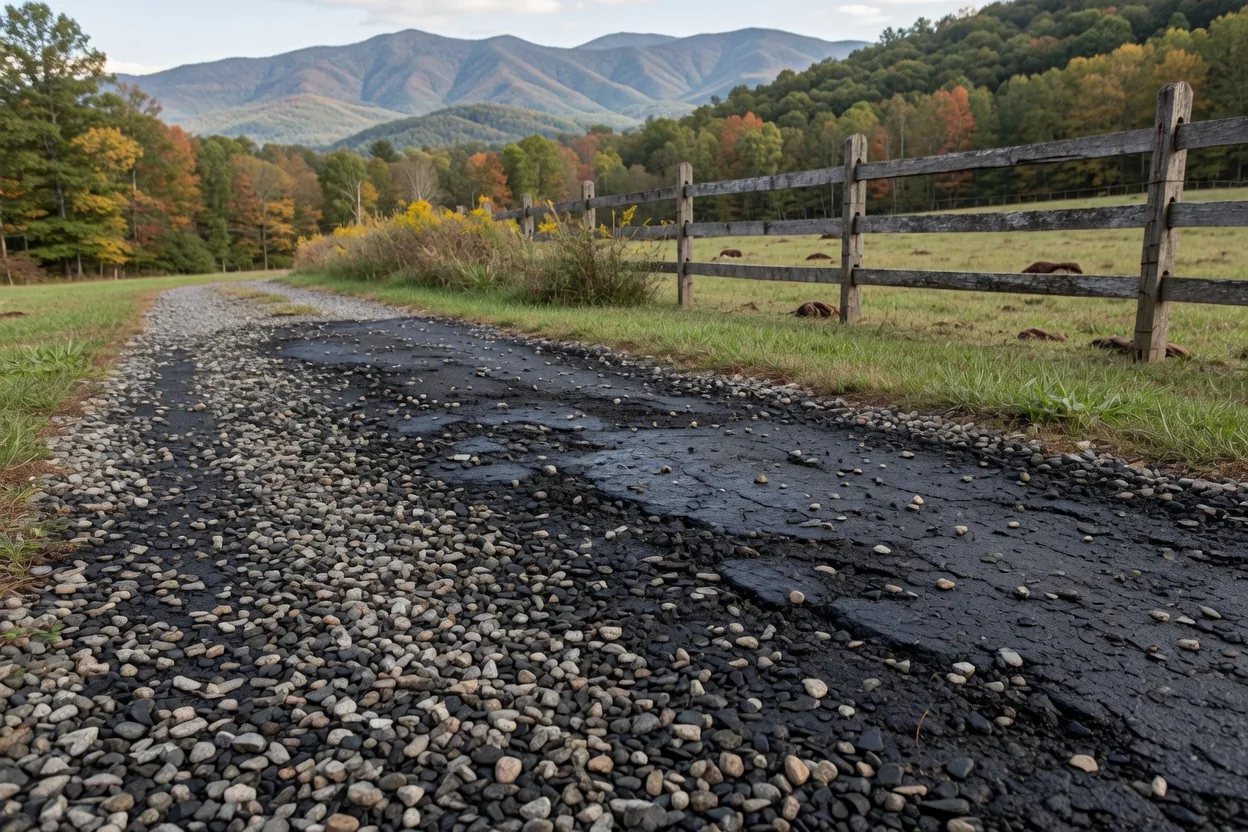
A tar and chip surface installed with proper base prep and drainage can hold up well through many WNC winters. The loose chips that were not fully embedded will shed in the first season — this is normal, not failure. What remains after that first winter is a tightly bonded, textured surface that handles rain and mountain grades better than smooth asphalt in wet conditions, and requires no sealing to maintain its bond.
Edges are the first area to monitor. Where chip seal meets turf or gravel, freeze-thaw cycles and root pressure can crack the edge and allow water under the mat. Keeping vegetation trimmed back from the edge, and addressing any edge cracking before a freeze season, extends the life of the main surface significantly. Ask your contractor to describe what normal first-year chip loss looks like versus what surface deterioration requiring repair looks like — those are two different conversations, and a contractor who can explain the difference clearly has worked in this climate before.